
Machines
Industrial dryers for biomass, sawdust and grain
Are you looking for reliable solutions that will increase the efficiency of your plant and ensure perfect parameters of the dried raw material?
At Comerc, we deliver professional dryers for biomass, grain, and difficult materials, which are the heart of modern technological lines. As an experienced manufacturer, we offer energy-efficient and automated systems that guarantee optimal material moisture, reduced operating costs, and trouble-free operation.
What are industrial dryers and how do they work?
An industrial dryer is a specialized piece of equipment used to remove moisture from various materials through heating and forced air circulation. Its main task is to reduce the water content in raw materials, which translates into improved quality and durability, as well as easier storage and transport of products. Dryers are used in many industries, such as the woodworking industry, agriculture, the energy sector, and waste processing (hence, for example, a sawdust dryer or a biomass dryer).
Moisture promotes the growth of mold and material degradation processes, which is why dryers play a crucial role in preserving the functional properties of products. Thanks to automatic control, it is possible to precisely adjust the drying parameters to the specifics of a given raw material and production requirements. This not only increases the efficiency of the process but also allows for significant energy savings.
A professional dryer is a key component of any efficient pellet and briquette production line. Proper preparation and drying of the raw material before the granulation process determines not only the smoothness of the production itself but, above all, the quality and aesthetics of the finished fuel.
Industrial drying solutions for sawdust, wood chips, grain and corn
Selecting the right dryer depends primarily on the type of raw material, its particle size, and moisture content, as well as on capacity requirements and the final application of the material (which is why, for example, a small sawdust dryer is sometimes chosen)
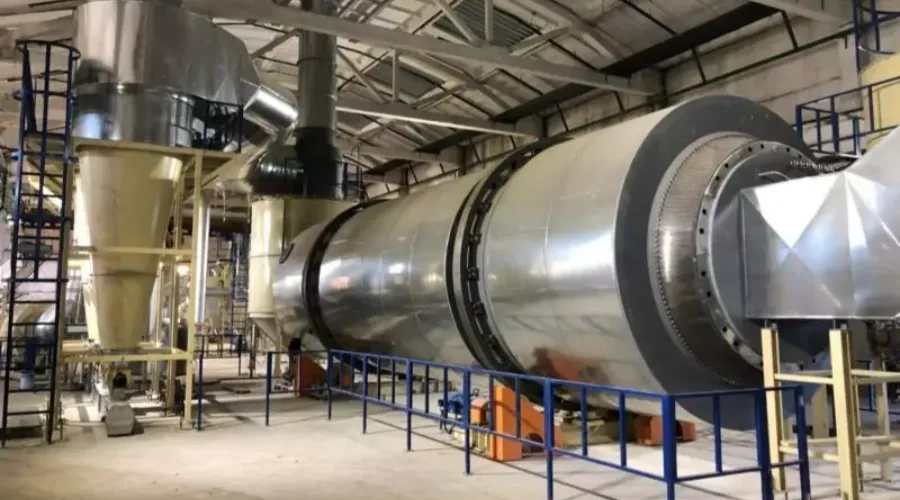
Dryers
Drum dryers

Dryers
Belt dryers
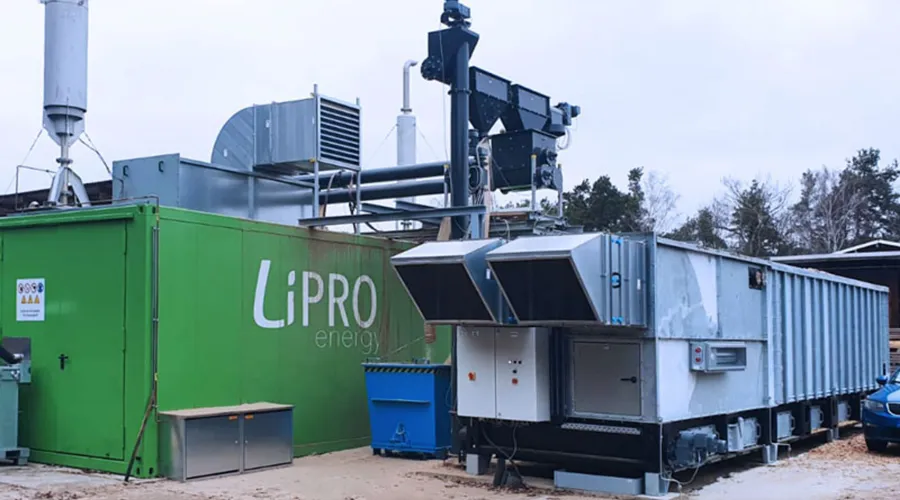
Dryers
Floor dryers
| MATERIAL | INITIAL MOISTURE (%) | FINAL MOISTURE (%) | CAPACITY (t/h) | DRYING TECHNOLOGY | ENERGY CONSUMPTION (MWh/t of evaporated water) |
APPLICATION |
|---|---|---|---|---|---|---|
| grains | 18-25 | 14-13 | 5-60 | floor dryer | approx. 0.8 | storage, further processing |
| drum dryer | 0.9 | |||||
| belt dryer | 1.1 | |||||
| corn | up to 35 | 14-15 | 5-60 | floor dryer | approx. 1.1 | animal feed, food industry |
| drum dryer | – | |||||
| belt dryer | – | |||||
| sawdust | 45-55 | 8-12 | 1-20 | floor dryer | approx. 0.8 | pellets, wood briquettes |
| drum dryer | 0.9 | |||||
| belt dryer | 1.1 | |||||
| wood chips | 40-55 | 10-15 | 1-20 | floor dryer | approx. 0.8 | energy biomass, pellet, wood briquette |
| drum dryer | 0.9 | |||||
| belt dryer | 1.1 | |||||
| agro and forest biomass | 20-60 | 10-15 | 1-20 | floor dryer | up to 0.8 | energy biomass, animal feed, pellet, briquette |
| drum dryer | 0.9 | |||||
| belt dryer | 1.1 | |||||
| peat | 50-70 | 20-30 | 2-10 | floor dryer | approx. 0.8 | horticultural substrates, energy sector |
| drum dryer | – | |||||
| belt dryer | – | |||||
| RDF (alternative fuel) | 40-60 | 10-15 | 2-20 | floor dryer | approx. 0.8 | industrial fuel |
| drum dryer | 0.9 | |||||
| belt dryer | 1.1 | |||||
| brewer’s/distiller’s spent grain | approx. 80 | 10 | 1-10 | floor dryer | approx. 0.8 | animal feed, energy raw materials |
| drum dryer | 0.9 | |||||
| belt dryer | – | |||||
| molasses | liquid or paste-like | dry powder or granules | 1-10 | floor dryer | approx. 0.8 | feed and food industry |
| drum dryer | 0.9 | |||||
| belt dryer | – | |||||
| straw | up to 40 | 10-15 | 1-10 | floor dryer | – | energy biomass, animal feed |
| drum dryer | – | |||||
| belt dryer | 1.1 | |||||
| sewage sludge | 80-85 | 10-30 | 1-10 | floor dryer | approx. 0.8 | combustion, composting |
| drum dryer | 0.9 | |||||
| belt dryer | – |
Sawdust dryers for wood pellet production
Energy-efficient drying and automated moisture control
Modern dryers offered by Comerc are equipped with advanced heat recovery and automatic control systems. As a result:
-
energy consumption is optimized, being the lowest among the solutions offered on the market,
-
operating costs are significantly reduced,
-
pollutant emissions are minimized,
-
the drying process is more efficient and environmentally friendly.

Industrial dryer types: rotary drum, belt and floor dryers
| TYPE OF DRYER | OPERATING PRINCIPLE | APPLICATION | CAPACITY (t/h) | MOISTURE REDUCTION | ENERGY CONSUMPTION / PARAMETERS |
|---|---|---|---|---|---|
| Drum dryers | Moving material within a rotating drum; intensive contact of raw material with hot air; automatic control. | biomass, coal, sawdust | 2 – 10 | from approx. 50% to 8-12% | below 0.9 MWh/t of evaporated water |
| Belt dryers | Use of perforated belts transporting material through a stream of hot air. | sawdust, wood chips, sewage sludge (of various granulation and delicate structure) | 0.5 – 15 | from approx. 50% to 8-12% | temperature adjustable up to 120°C |
| Floor dryers | Material distributed by a screw system onto movable scrapers; controlled layer thickness; forced air circulation. Evaporation capacity: 2.5 t of water/h. | biomass | 3.0 – 3.5 | from 50% to approx. 10% | 0.8 MWh per 1 ton of dry material (air temp. approx. 85°C) |
Industrial dryers – frequently asked questions
What materials can Comerc industrial dryers process?
How much energy does a sawdust or biomass dryer use?
What is the ideal sawdust moisture content for pellet production?
What is the difference between a floor dryer and a rotary drum dryer?
The main difference lies in the material flow mechanics and energy efficiency. In a floor dryer, the material is distributed by a screw system onto movable scrapers with minimized energy consumption (approx. 0.8 MWh/t). A drum dryer, on the other hand, relies on moving the material within a rotating drum, which ensures intensive contact with hot air at a heat consumption of approx. 0.9 MWh/t.
What drying capacities are available for grain and corn?
Are you looking for an industrial dryer customized to your production requirements?
Contact our technical advisors – we will analyze your raw material, select the right capacity, and prepare a quote tailored to your budget.
Why Comerc?
20 years of innovation for green energy
After-sales and maintenance support, assistance in securing financing, staff training, and warranty and post-warranty service for all our machines and equipment.
We use technologies with the lowest electrical and thermal energy consumption on the market per ton of finished product.