
Production lines
Pellet production lines
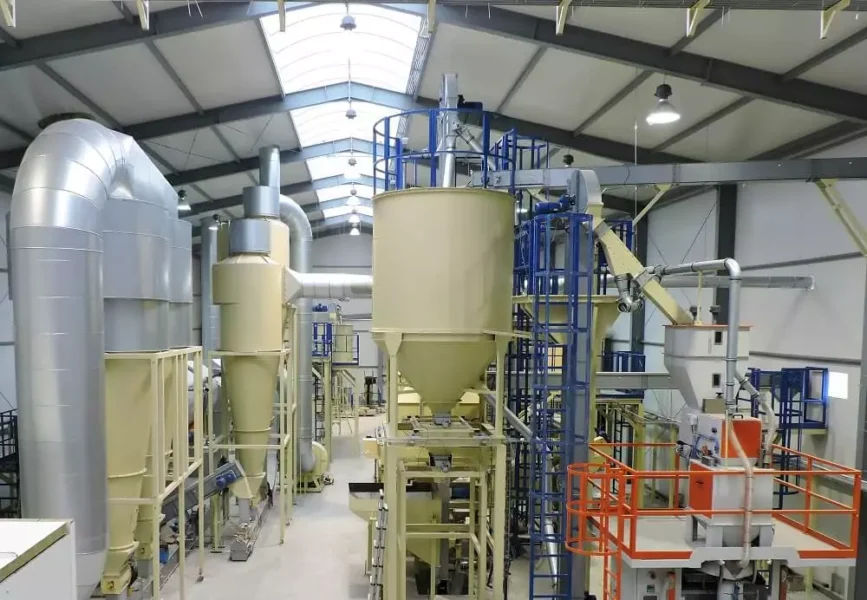
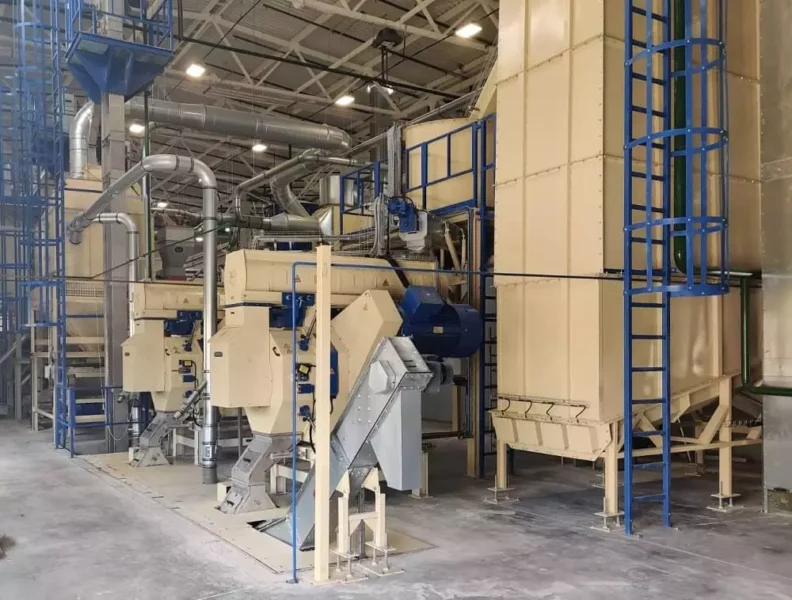
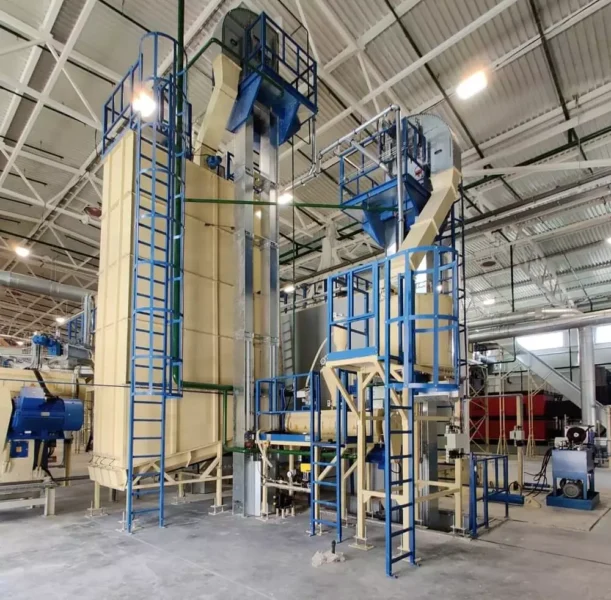
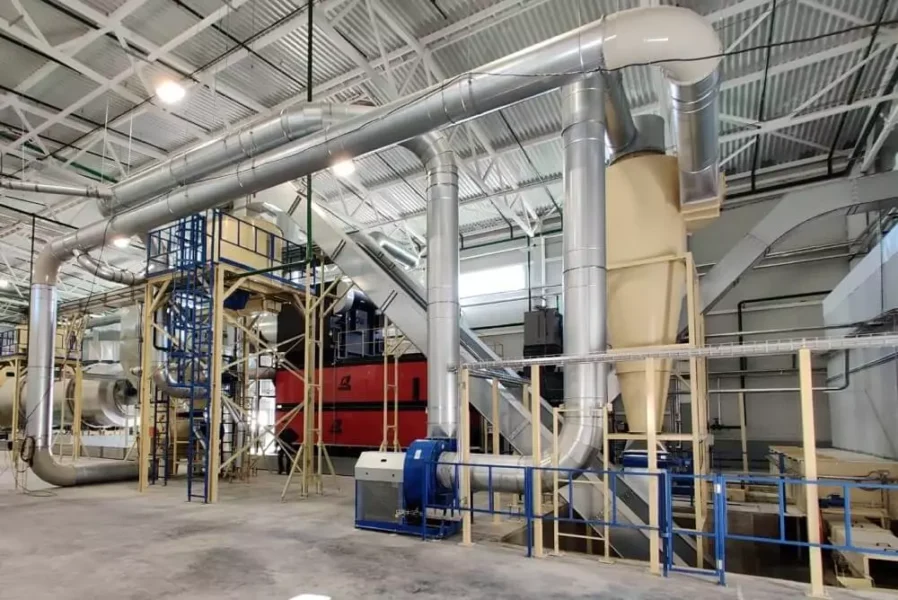
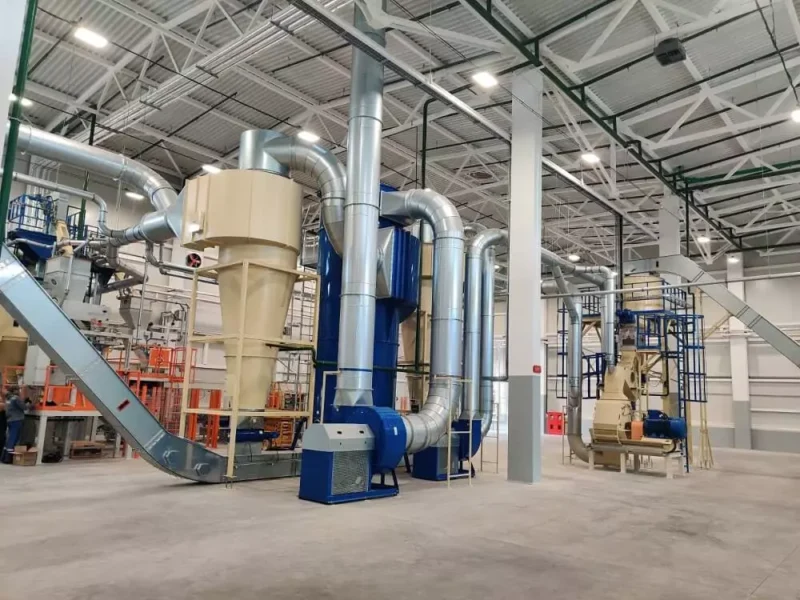
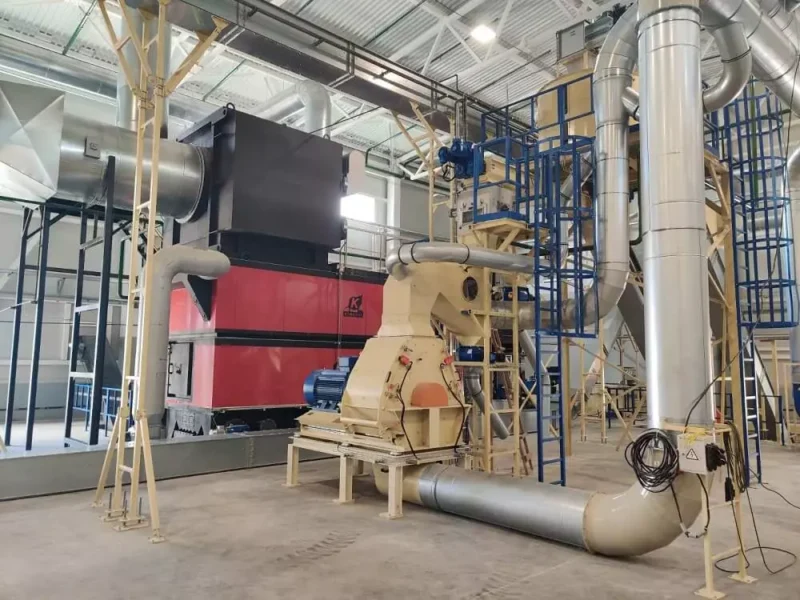
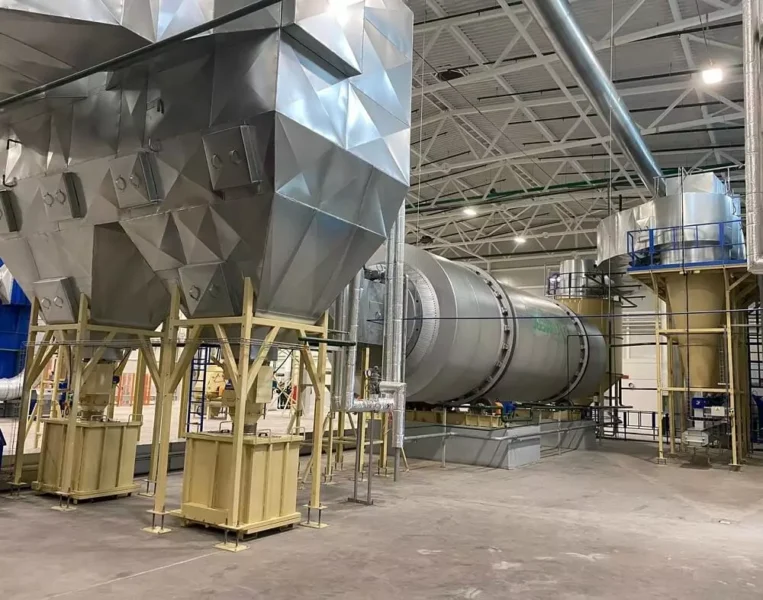
Comerc manufactures complete pellet production lines. These are fully automated, synchronized systems designed for efficient, stable operation. We supply pellet production lines at competitive prices, and we also manufacture the individual machines that make up each line.
Description of the production process on pellet lines
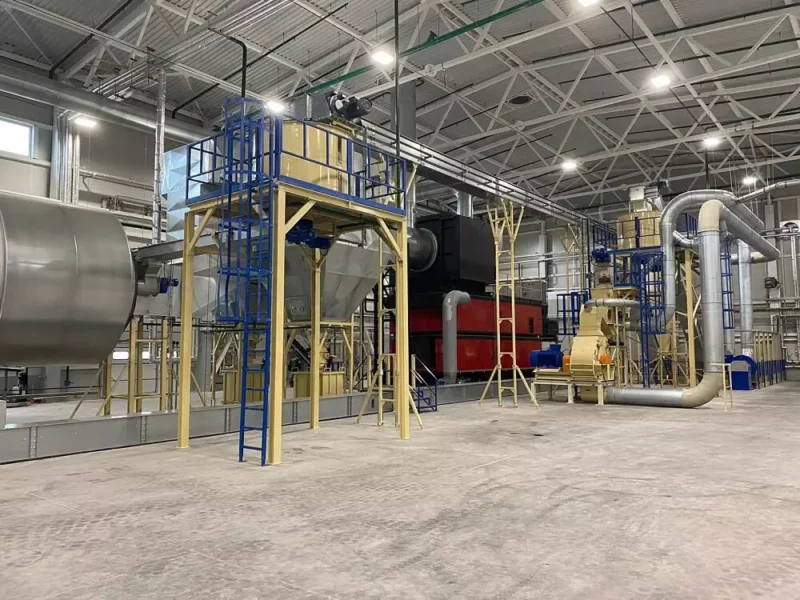
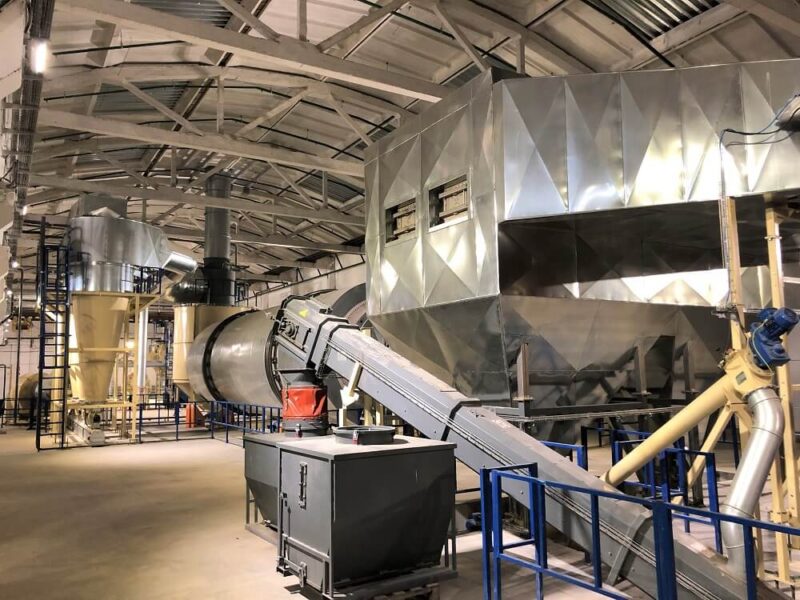
The production cycle begins with delivering wet sawdust to a recessed slat conveyor using a loader. The conveyor is equipped with a scraper and smooth speed control. From there, the sawdust is transported to a coarse-fraction separator, where larger pieces of wood, boards and stones are removed. After screening, the material is transferred to a wet-material storage silo with a hydraulic discharge system.
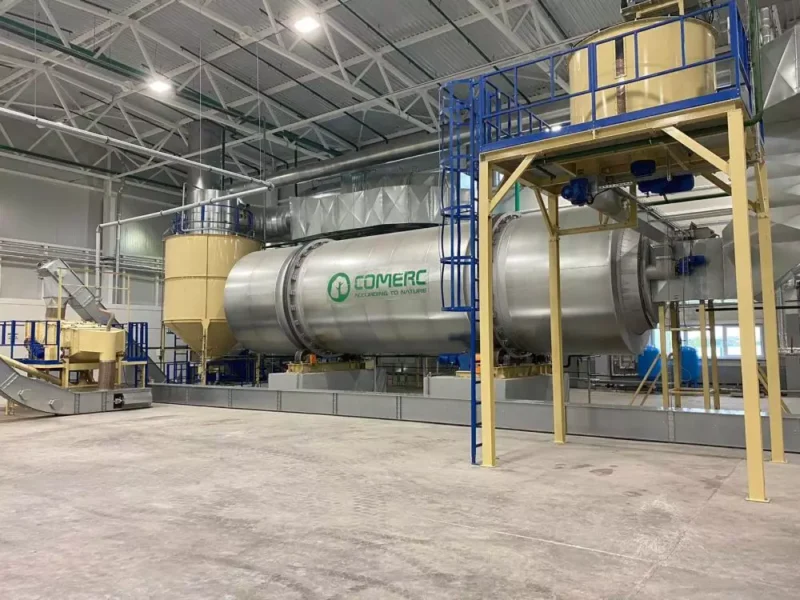
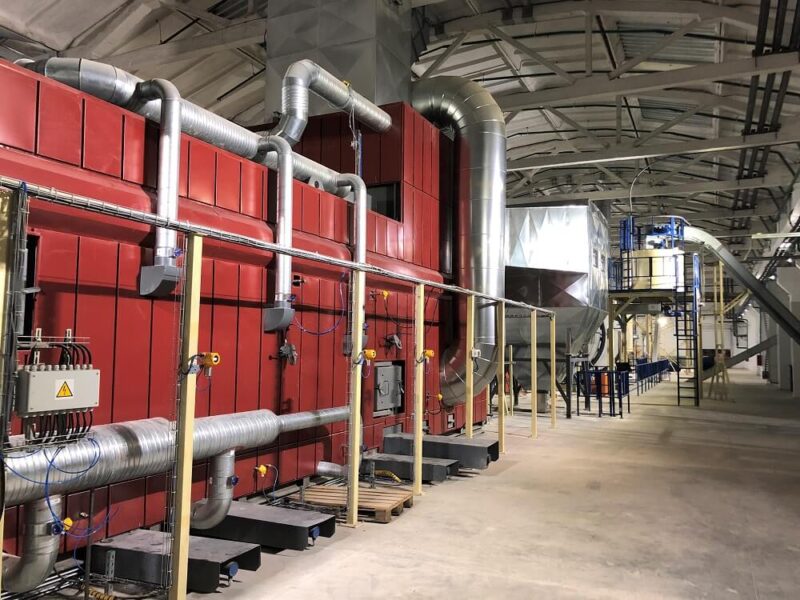
The wet sawdust then moves onto the dryer’s slat conveyor, which automatically feeds material into the dryer. The feed rate depends on the moisture content of the sawdust. During this stage, the material is dried from 55–60% moisture down to 8–10%. Once dried, the material falls into the dryer’s expansion chamber, where dry sawdust is separated from water vapour and the drying medium.
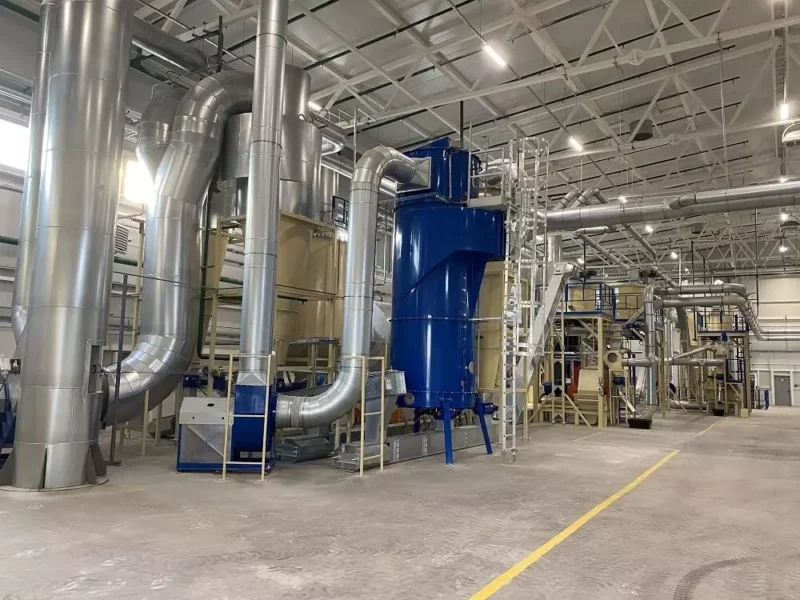
Dry material is transported out of the chamber via a screw conveyor. Here, moisture levels are measured and used for automatic dryer control. Steam and drying gases are then introduced into the dryer through a cyclone, which removes fine airborne particles. Separated dust is returned to the production process through a rotary valve.
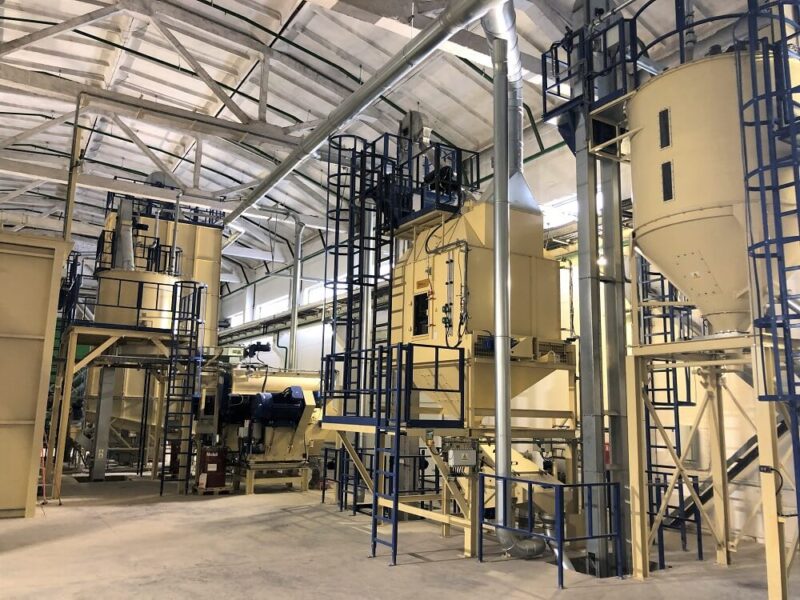
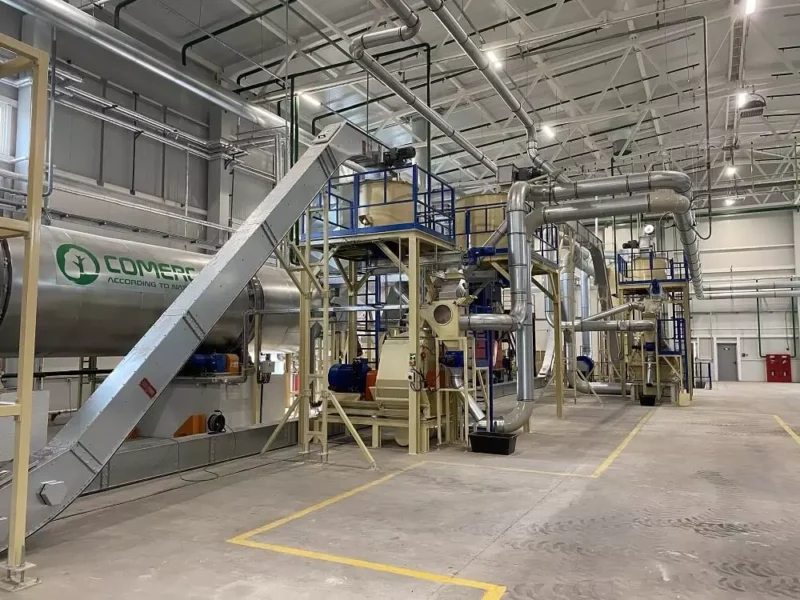
The dried sawdust passes through a pneumatic separator and a magnetic separator, where stones and metal contaminants are removed. The material then enters the hammer mill, where it is shredded to the correct, uniform fraction. After milling, the sawdust is stored in a dry-material silo. From there, it is transported to the final preparation system, where—if required—additional drying medium is introduced and moisture is precisely stabilised to 11–12%.
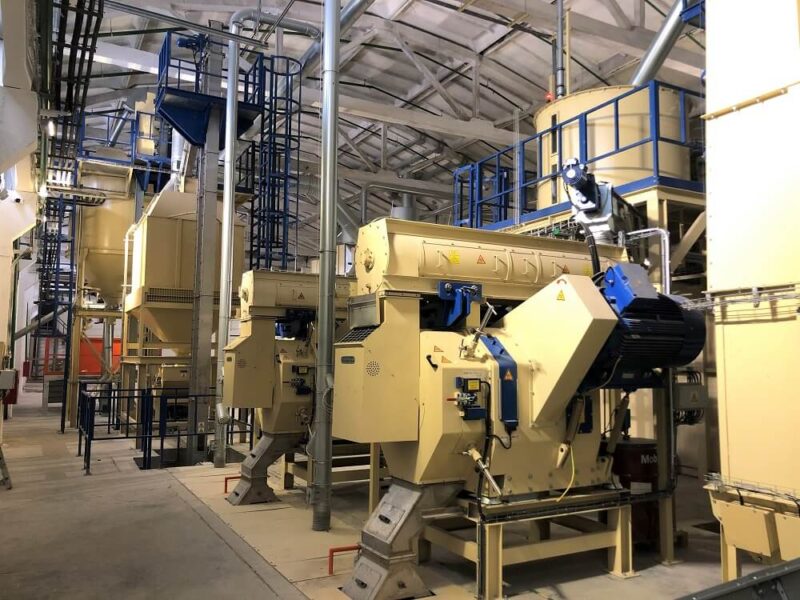
The prepared material is transferred to a buffer tank, from which a screw conveyor feeds the sawdust into the conditioner. In the conditioner, 180°C steam is added. This significantly improves pellet bonding, stabilises granulator operation and reduces wear on the die and rollers. From the conditioner, the material enters the granulator, where it is pressed into pellet.
Hot pellet is transported to a counterflow cooler, where it is cooled and hardened. The cooled product then goes to the pellet screener, which removes dust and fines. Finished pellet is collected in a storage bin, while dust and fine particles are extracted from the screener and the entire line through the aspiration system. The storage bin is connected to an automatic packaging line that fills 10–50 kg bags. The bin is also equipped with a Big Bag filling station with an electronic scale.
The entire pellet line operates automatically, with full process visualisation. Each bin is equipped with sensors indicating fill levels. If any part of the system stops, the line automatically shuts down remaining sections in the correct sequence to prevent clogging or overflow.
Why invest in a pellet production line?
Pellet production lines are increasingly being installed by large manufacturers, small businesses and even private farms. Eco-friendly heating solutions are rapidly gaining popularity, replacing traditional fuel sources. This alone makes investing in pellet-production equipment highly profitable.
Additionally, raw materials needed for pellet are widely available—especially as waste from the furniture industry (Poland is one of Europe’s leaders in furniture production). Producing biofuel from waste also positively impacts a company’s environmental image.
Pellet quality depends heavily on proper raw-material preparation, which is why a complete pellet production line—built from compatible machines including a material-preparation system—is the best investment for anyone serious about entering the market. Modern pellet lines are energy-efficient, low-maintenance and backed by professional service and consulting from producers like Comerc. In most cases, the investment pays for itself within 2–3 years.