Machines
Hammer Mills and Biomass Shredders
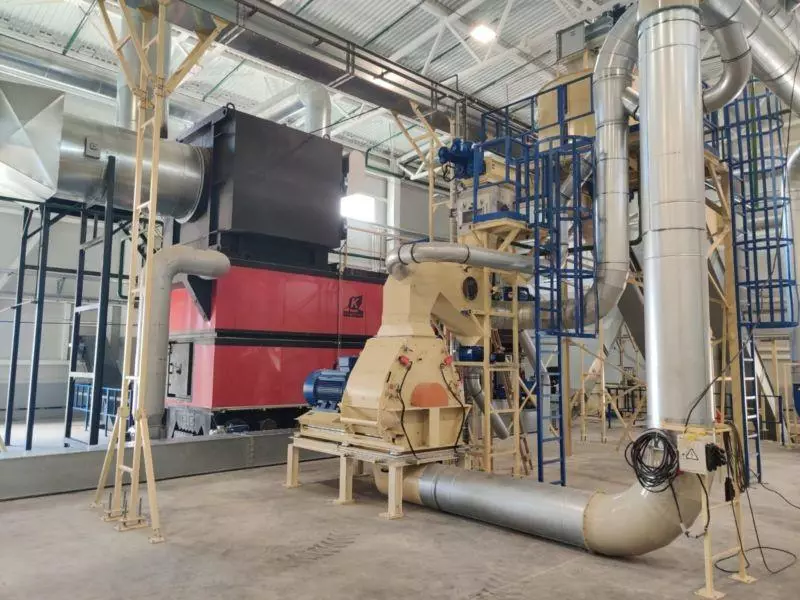
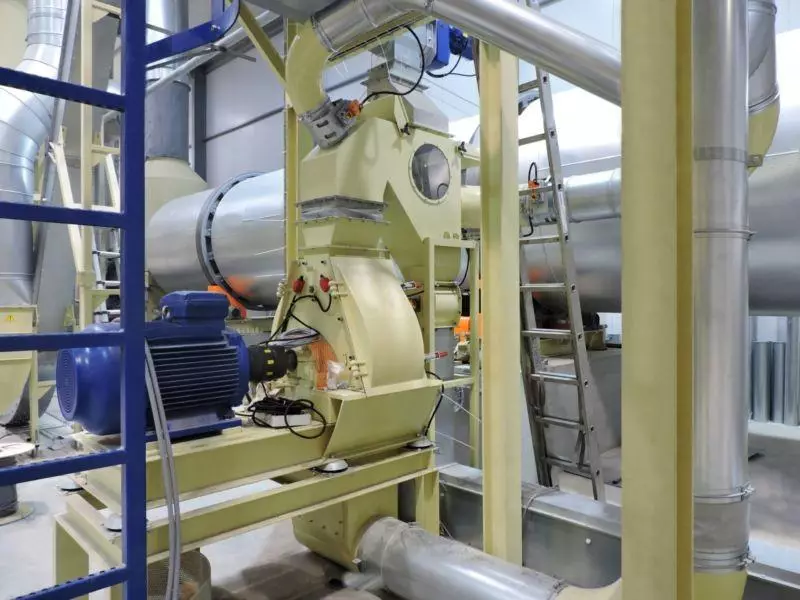
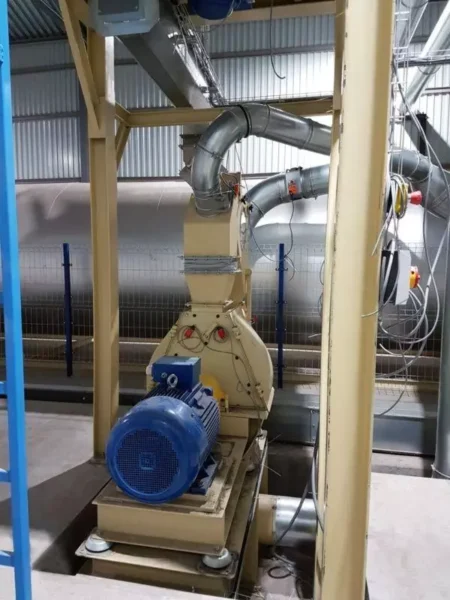
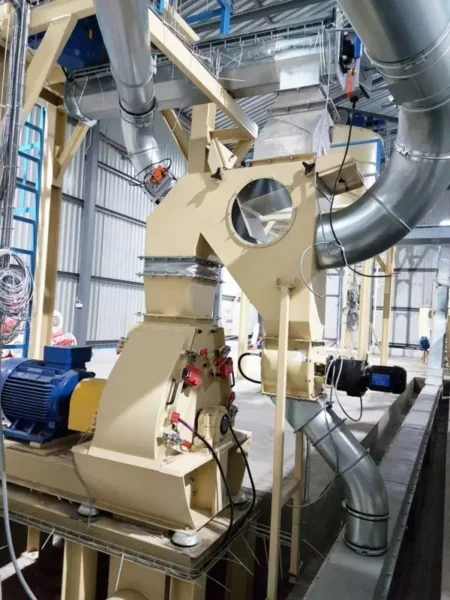
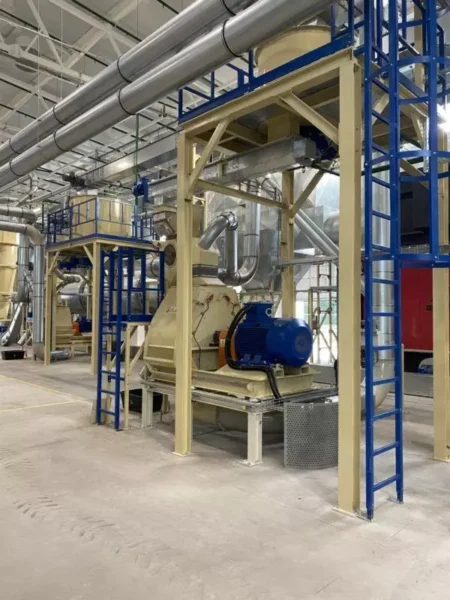
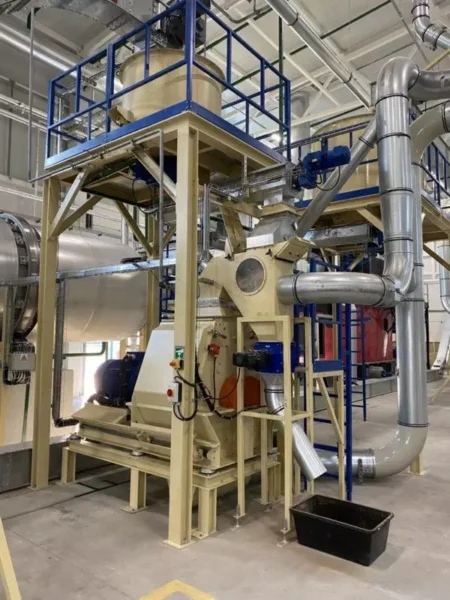
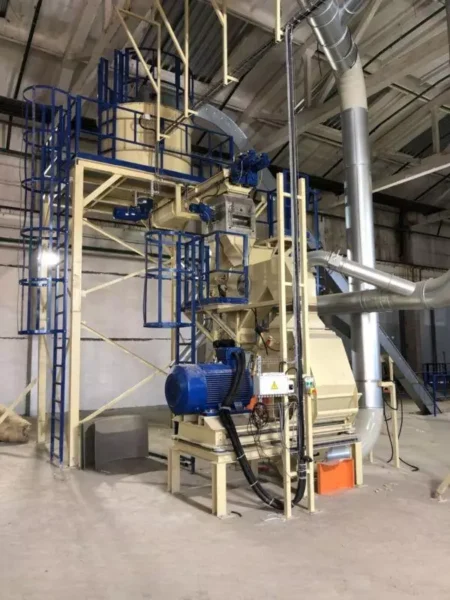
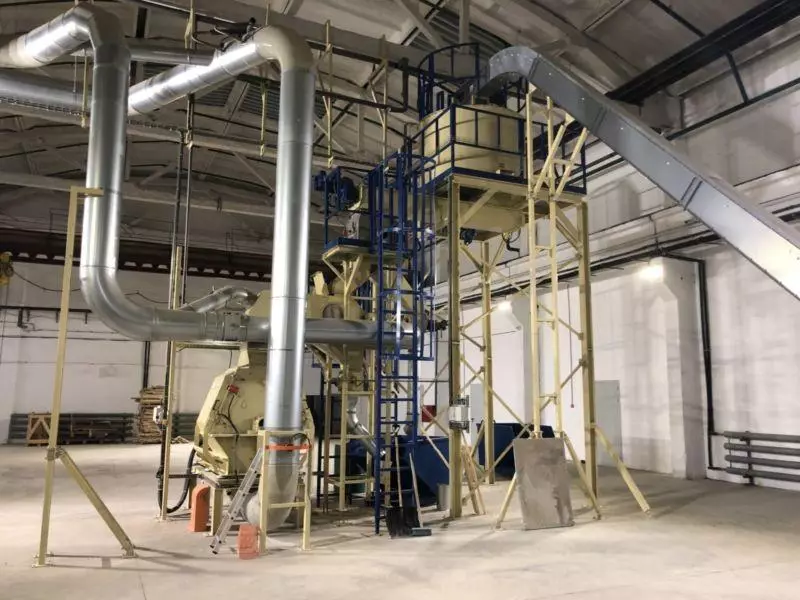
Hammer mills are machines designed to grind various loose materials, including biodegradable materials, into a desired fraction. They are widely used across multiple industries, most commonly in the production of animal feed, pellet and briquette manufacturing.
How does a hammer mill work?
A hammer mill efficiently reduces previously dried sawdust, as well as wood chips, shavings, grains, veneer, straw, stems and even small pieces of furniture boards, producing a uniform mixture ideal for further processing.
Hammer mills – also known as impact shredders or sawdust shredders – are used both in large industrial plants and small agricultural operations. Although individual models may differ in design, the key components and working principle remain the same.
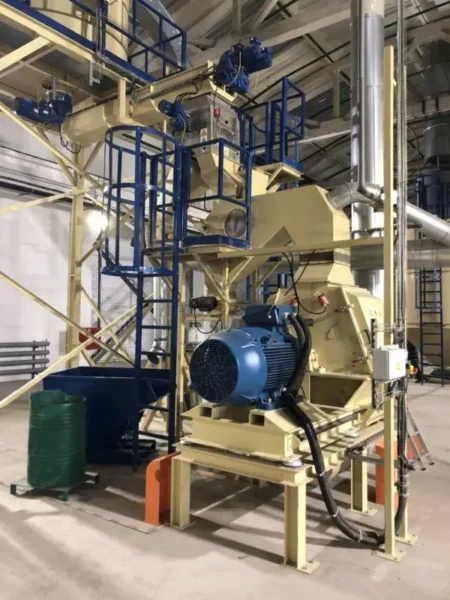
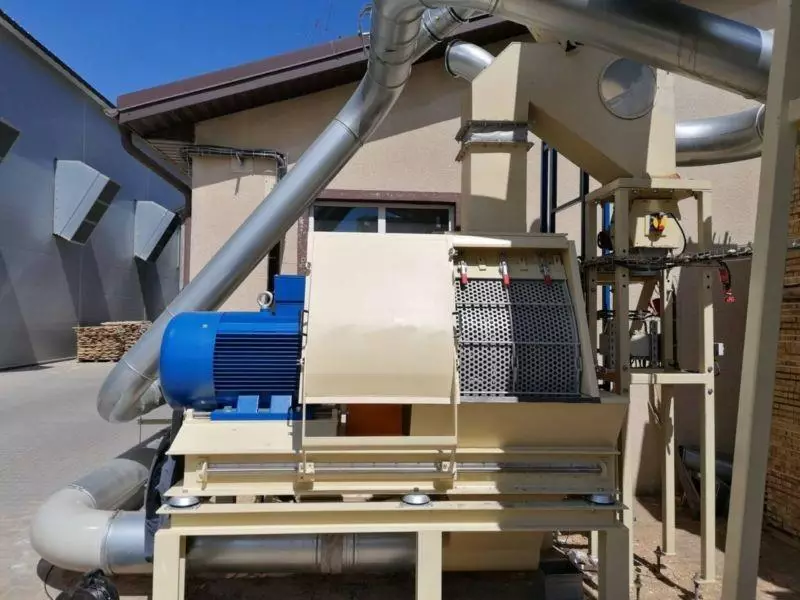
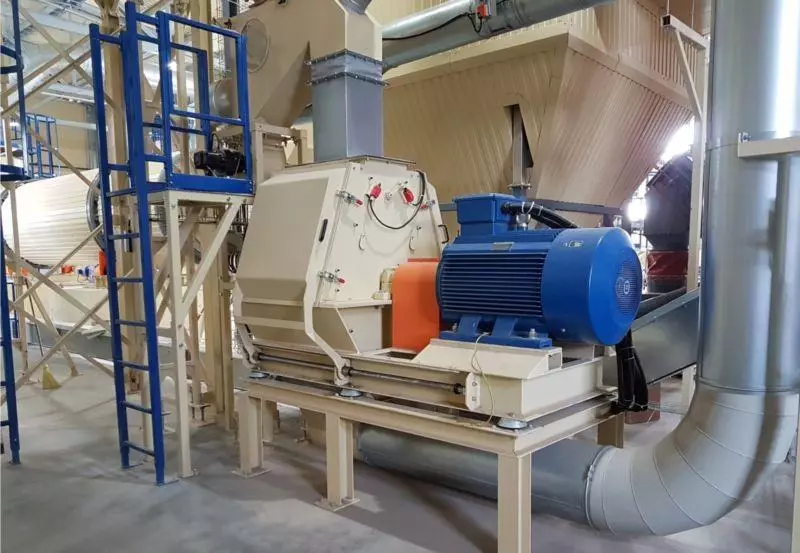
Material enters the main grinding chamber through a feeder. Size reduction occurs through the impact of the rotating hammers on the material, as well as through collisions between the material and the chamber walls. The final particle size depends on the diameter of the perforations in the installed screen.
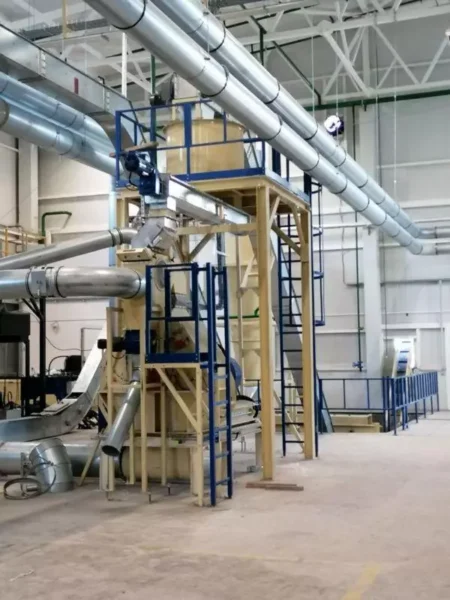
It is essential that no contaminants enter the grinding chamber, as they may cause severe damage to the machine. We recommend discharging the processed material pneumatically – this allows the use of a pneumatic separator that removes stones and other contaminants that could cause explosions. Pneumatic transport also increases mill efficiency and makes it easier to move the material to subsequent stages of the pellet production line.
Advantages of hammer mills
Hammer mills can process a wide range of raw materials. They improve the production process of pellets and briquettes, and thanks to their high efficiency, they help reduce overall production costs. Screens and hammers can be replaced quickly, allowing near-continuous operation. The bidirectional rotor ensures maximum hammer usage without the need for manual repositioning. Low vibration levels improve working comfort and stability.
Key benefits include:
– optimal output with low operating costs
– minimal vibration
– ability to grind a wide range of raw materials
– quick and easy replacement of screens and hammers
– bidirectional rotor for longer hammer life
– equipped with magnetic and pneumatic separators
These features enhance not only the performance of the hammer mill itself, but also the efficiency of the entire pellet or briquette production line.
CMB hammer mills
Our CMB-series hammer mills are designed for grinding and homogenizing dry, loose materials with moisture content up to 15 percent for further processing. Higher moisture levels are possible, but they significantly affect performance.
Depending on the model, CMB hammer mills can operate at capacities ranging from 2 t/h to 10 t/h. They efficiently process grains, wood shavings, wood chips, bark fragments, veneer and sawdust, making them an excellent choice for pellet and briquette production.
Hammer mills – characteristics
Hammer mills operate by grinding material with special working elements – hammers mounted on a rotating shaft. This ensures a uniformly ground product that is crucial for further pellet and briquette processing.
Key advantages of hammer mills include:
– higher quality of the final product
– improved pellet and briquette durability thanks to consistent granulation
– higher calorific value and combustion efficiency
– improved overall energy efficiency
Adjustable screen sizes and rotor speeds allow precise control over particle size, enabling manufacturers to tailor the grinding process to specific raw materials and production requirements.