
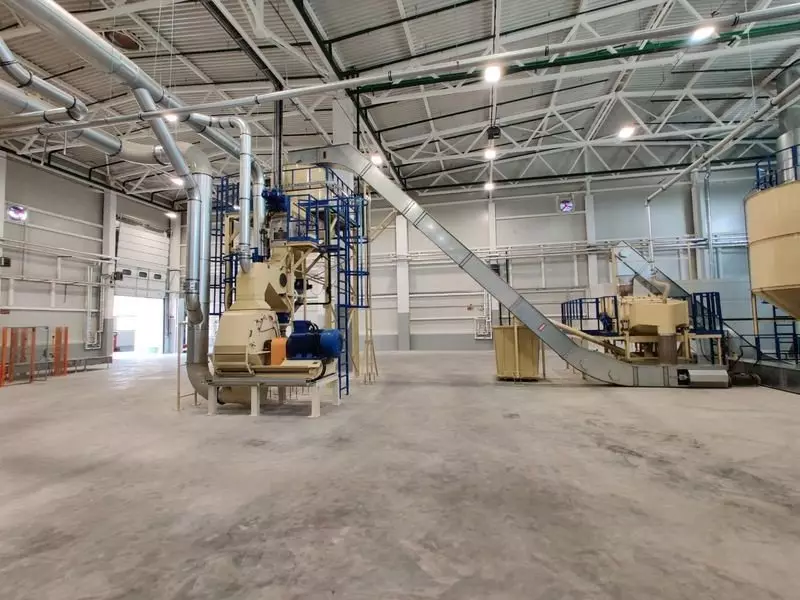
In the industrial world, and particularly in biomass processing plants, chain conveyors—also known as redlers—play a crucial role. It is thanks to them that various bulk materials, such as pellets, sawdust, wood chips, or dust, can be transported efficiently and reliably. In this article, we will present the construction and the advantages of using redlers in production processes. We invite you to read on!
Construction of Chain Conveyors
Redler-type chain conveyors consist of three main sections. The first is the drive section, which in its standard version is equipped with an electric drive and an appropriate gearbox, a chain tension control sensor, and an inspection hatch with an overflow sensor.
The next part is the tensioning section, which ensures constant tension of the transport chain. Thanks to its design, it guarantees the operational reliability of the device and its long service life. The final elements are the intermediate sections, which serve to connect the individual parts of the conveyor. These typically have standard lengths of 1,900 mm and 1,950 mm; however, it is also possible to manufacture these components in custom lengths.
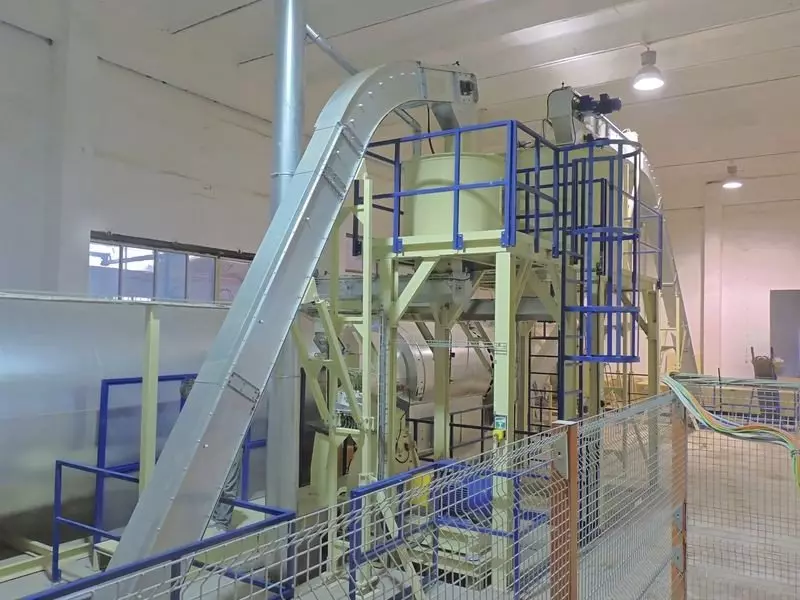
Benefits of Using Redlers
Using chain conveyors in the production of briquettes, pellets, and the processing of wood biomass brings many advantages.
First, redlers are characterized by high energy efficiency because they offer the capability to transport materials both vertically and horizontally over long distances using a single device. Second, due to their versatility, redlers facilitate the automation of raw material transport, which increases production output. They allow for the continuity and reliability of the entire technological process while minimizing the number of individual machines required.
Third, because of their design, redlers have a wide spectrum of applications. They are capable of transporting a variety of materials over long distances without damaging their structure.