
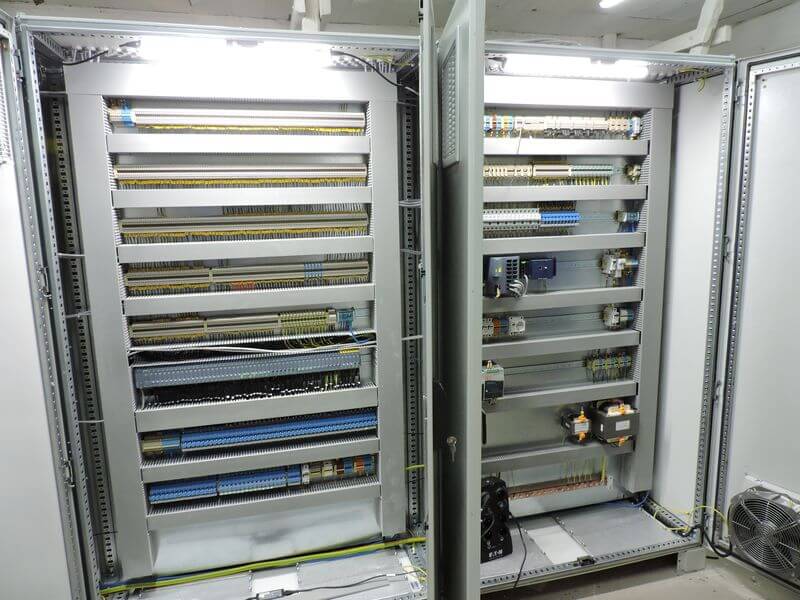
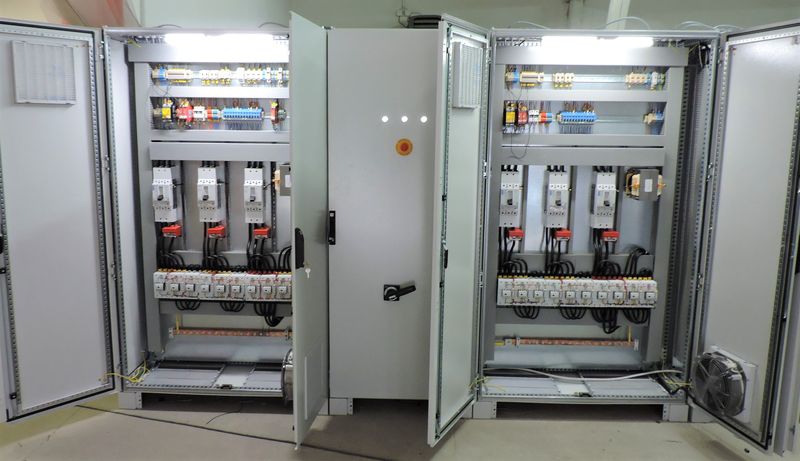
Control cabinets are specialized enclosures designed to manage, activate, and deactivate a wide range of devices and interconnected systems. By integrating and carefully configuring multiple modules and components within a single cabinet, it becomes possible to manage an entire production line, an industrial facility, or even highly complex operational units from one centralized location. Depending on specific operational requirements, these cabinets are manufactured with distinct features and varying levels of protection, which are classified by specific protection ratings.
Control Cabinet Protection Ratings – The IP Classification System
Control cabinets are engineered to provide varying levels of protection for the critical electronic systems housed inside. Depending on the installation environment and surrounding conditions, a specific level of defense is required. This is universally defined by the IP (Ingress Protection) rating system.
The first digit of the prefix concerns the degree of protection against foreign bodies and against touch. It starts from the digit 0 meaning no protection, through increasingly higher values up to the digit 6:
- 0 – no protection,
- 1 – protects against particles with a diameter of over 50 mm and against touch with the back of the hand,
- 2 – protects against solid bodies with a size of 12.5 mm and against touch with a finger,
- 3 – protects against particles with a size of 2.5 mm and against opening the cabinet with a tool,
- 4 – provides protection against particles larger than 1 mm and against breaking into the cabinet with a wire,
- 5 – protects the inside of the control cabinet against a large amount of dust that could lead to system damage; fully protects the cabinet against touch as well,
- 6 – provides complete dust tightness and protection against touch.
On the other hand, the second digit of the prefix in the IP classification means protection against water ingress and is graded in a similar way as in the case of the first one, but up to the digit 9:
- 0 – no protection
- 1 – protects against vertically falling drops
- 2 – protects against drops falling at an angle of 15 degrees
- 3 – protects against drops deviating even by 60 degrees from the vertical
- 4 – protects the cabinet against water drops falling from every side
- 5 – protects against the destruction of the cabinet by a water jet
- 6 – gives protection even against the action of a strong water jet
- 7 – protects against flooding the cabinet after immersing it in water for a very short time
- 8 – protects against damage to the cabinet after immersing it in water even for a longer time
- 9 – protection against flooding with a strong jet of water under pressure
For indoor installations, an IP54 rating is standard practice, offering reliable protection against dust accumulation and minor water splashes. Conversely, control cabinets installed outdoors require a minimum rating of IP65 to ensure the internal components are completely safeguarded against dust storms, heavy rain, and potential flooding.