
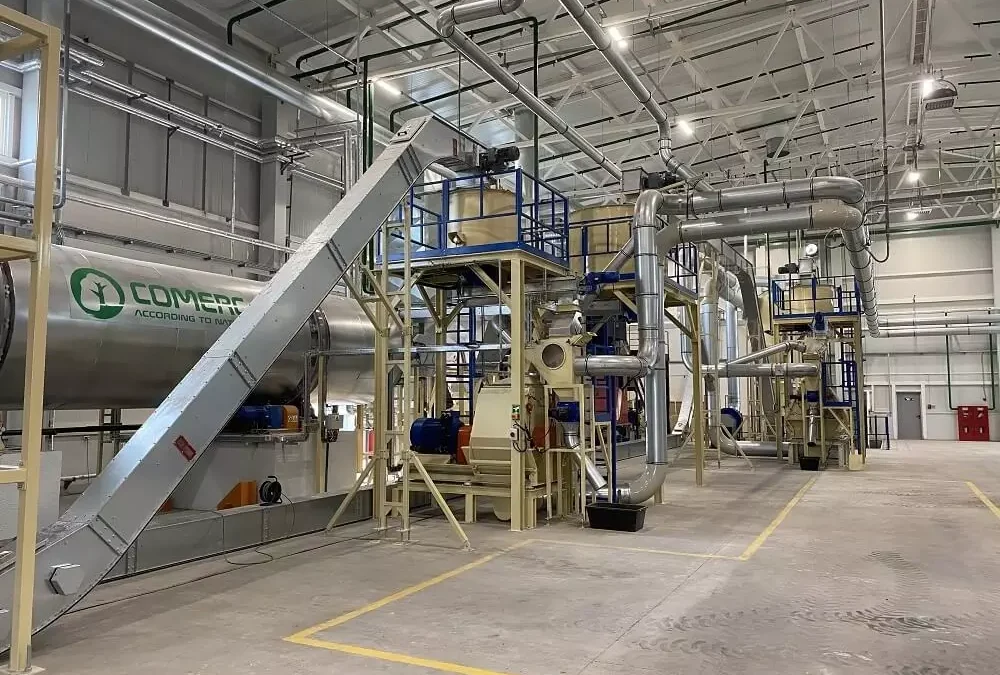
Wood pellet is among the most ecological, efficient, and popular energy sources used in both industrial facilities and households. Its production can be very profitable, especially if a company has its own raw material in quantities sufficient to meet the capacity requirements of the technological line. Let’s find out what elements a pellet production line consists of and how wood pellet is created.
What does wood pellet production involve?
Wood pellet is made from small wood fragments, such as post-production waste from wood-based materials or furniture, as well as sawmill processing or wood chips. These can take the form of sawdust, shavings, wood chips, or larger pieces. The wood biomass used for pellet production is dried and shredded, and after appropriate processing, it is treated with steam to release lignin. After being pressed under increased pressure, the pellet is cut and cooled, and in the final stage, it is bagged or packed into big-bags.
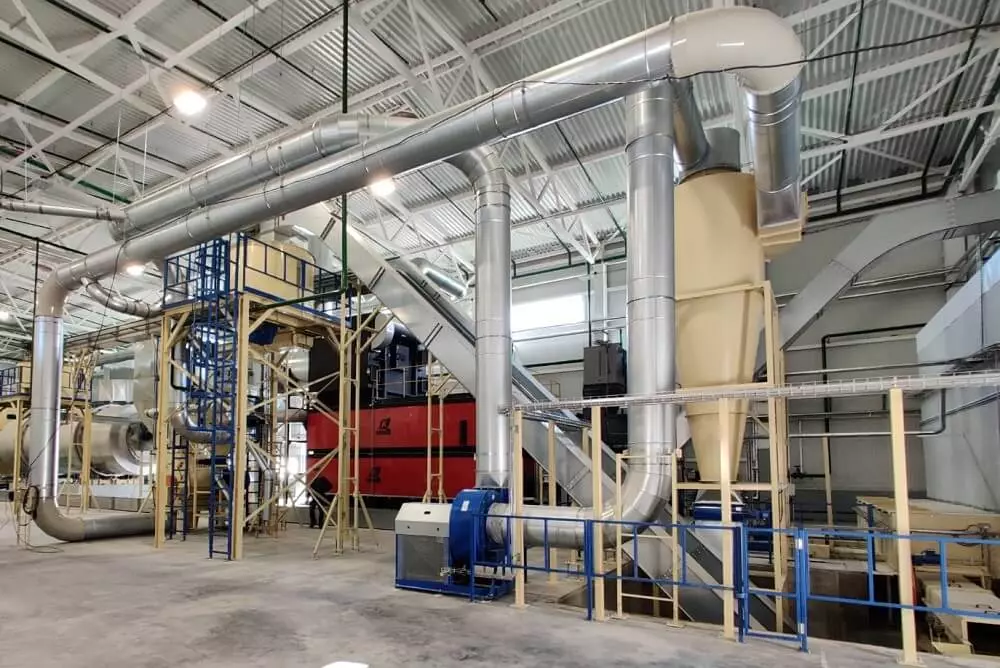
What devices make up a pellet production line?
The first stage of production is the shredding of the input material. Therefore, the basic equipment of the production line will be a hammer mill, also known simply as a mill. The wood should be properly dried, so it must go to a drum dryer or a belt dryer. In order to remove dust and impurities that could reduce the cohesiveness of the final product and contribute to the potential failure of the machines and devices within the line, coarse fraction separators (magnetic and pneumatic) are used. After exposing the shredded raw material to steam, it must go to the granulator, where, with the help of rollers and a die, it is formed into small cylinders cut into appropriate lengths. The pellet must then be cooled to gain the proper cohesiveness and strength. The final stage is the pellet packaging section.
A pellet production line also includes many auxiliary devices. These include, among others, storage bins for collecting material at individual production stages, belt, drag, or screw conveyors depending on the needs, as well as dust extraction systems.