
The concept of Industry 4.0 (or the fourth industrial revolution) was created to define modern technologies used in industry, based on a unified cyber-physical system. From the following post, you will learn what characterizes this system, its practical application, and what distinguishes it from previous technologies.
The term Industry 1.0 refers to the production technologies of the first steam-powered machines. Industry 2.0 concerns the period of the first electrical and internal combustion devices and the beginnings of mass production. The use of computers in industry, i.e., the beginnings of production automation, is called Industry 3.0 or the era of digitization. Although it still continues, the latest technologies significantly deviate from the first automation systems, which is why they are referred to as Industry 4.0, which means integrated cyber-physical systems (Internet of Things), focused on maximizing production efficiency.
How has Industry 4.0 influenced production automation?
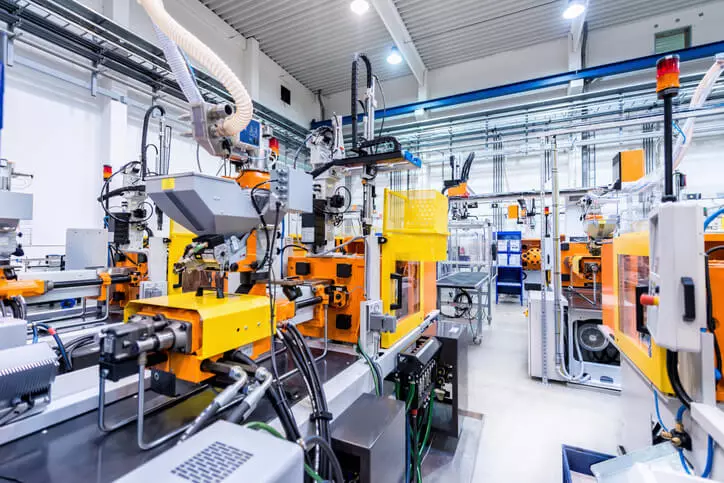
Industrial automation 4.0 permeates the entire functioning system of modern enterprises today, starting from the ways of contacting customers and ending with the method of shipping goods. Intelligent machines and sensors, used at every stage of work, communicate with each other through the network thanks to PLC controllers, inverters, operator panels, and other integrating devices. They collect data regarding breakdowns, work breaks, and the efficiency of individual devices, which can then be used for maintenance and optimization of production line operations. Thanks to the network, managing intelligent machines is also possible from all places in the world in real-time. This allows for a quick and simple increase in production efficiency and cost reduction, as well as minimizing the number of employees.