
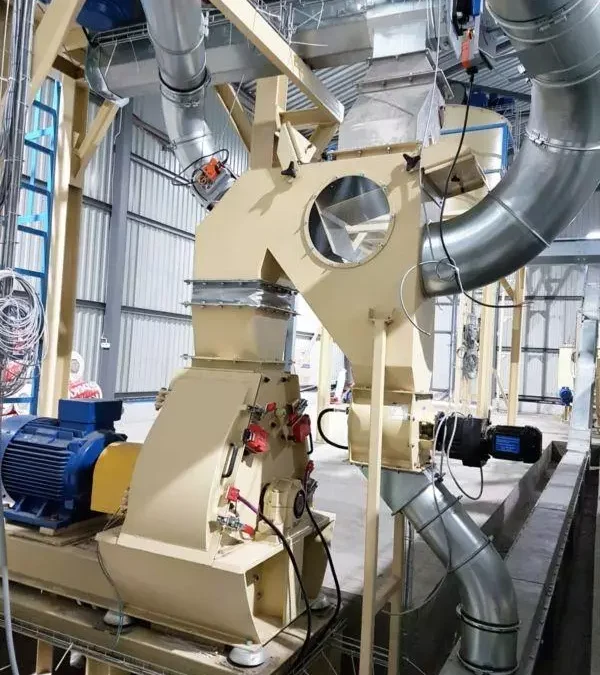
Hammer mills, also known as hammer crushers, are devices with a wide range of applications in agriculture and many branches of industry. Hammer mills are most commonly used for grinding various types of organic materials, such as wood chips, sawdust, or grains. Which parameters should you pay attention to when purchasing a hammer mill?
How does a hammer mill work?
Hammer mills are independent devices that successfully work in an individual mode; however, they most often form part of extensive technological lines as the main device of the raw material grinding section. Hammer mills are often equipped with magnetic or pneumatic separators that clean the material being ground, as well as electronic work control systems that prevent system overloads.
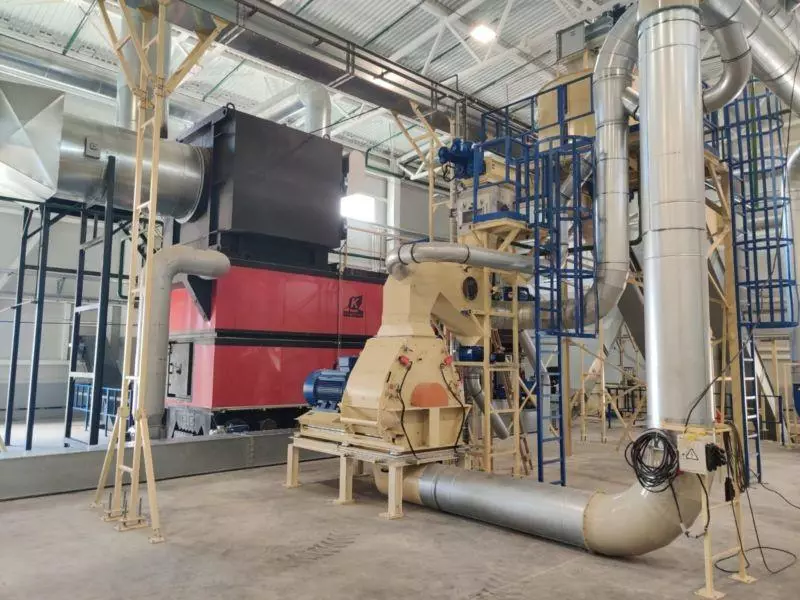
Parameters of hammer mills
To avoid potential overloading or underloading of the grinding system, it is necessary to select the optimal parameters of the devices included in the section, including the hammer mill. The most important technical parameters to consider when choosing a mill are:
- efficiency – given in m³/h. For industrial production, it should range approximately between 20 – 80 m³/h. Efficiency depends not only on the device’s construction but also on the type and physical properties of the raw material and the size of the fraction that requires grinding.
- drive power – can vary greatly across different models, most often ranging from 40-280 kW;
- engine speed – usually ranges from 1400-2900 rpm;
- working chamber diameter – must be matched to the number of hammers and other parameters of the device as well as the entire production line;
- hammer parameters – their number ranges from a dozen to over 100.
Modern hammer mills are energy-efficient, durable, and safe machines. The material that enters them should be properly cleaned (using a sifter and a magnetic separator that catches pieces of metal) to prevent damage to the device caused by stones or metal elements that may be present in the material.