
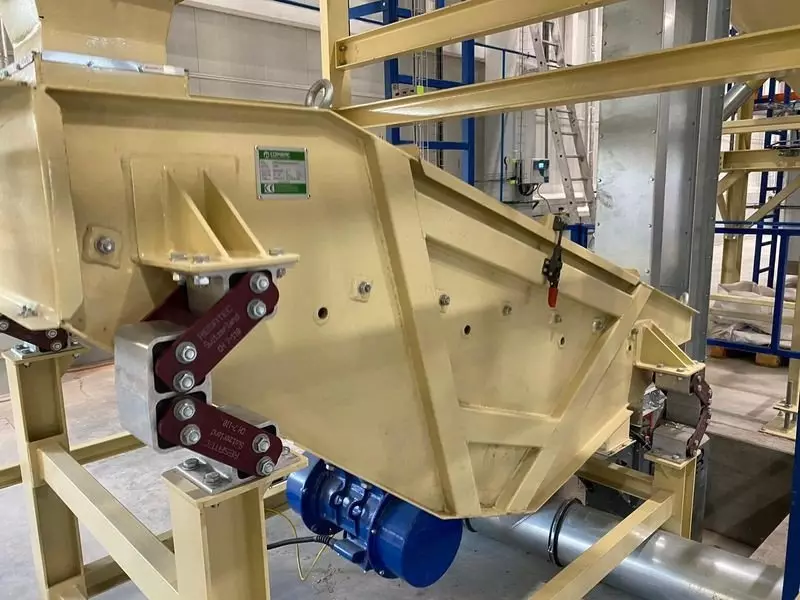
Vibrating screens are devices commonly used for fractionating various types of materials, both light and heavy. Screens are used in the construction industry, in agriculture, in the food industry, but also in the production of fuel materials. How is a vibrating screen constructed and how does it work?
A vibrating screen has a relatively simple construction. It consists of special sieves, a motor, and a vibration chamber. Its operating principle is based on the operation of a motor and an electric vibrator, which sets the device into vibration. From the feed inlet, the material lands on the sieves. Here, the finer fraction of the material passes through the sieve mesh. Coarse impurities remain on the sieves. The separated material is further transported to subsequent sieves and to the discharge, after which it is passed on to further processing stages.
By using multiple fine-mesh sieves, it is possible to obtain a perfectly smooth, fine mixture. Installing vibrating screens in pellet production lines affects not only the quality of the final product but also the proper operation of machines, equipment, and other elements of the production line, which may wear out faster if contaminants reach them—especially hard and sharp ones like stones or glass.
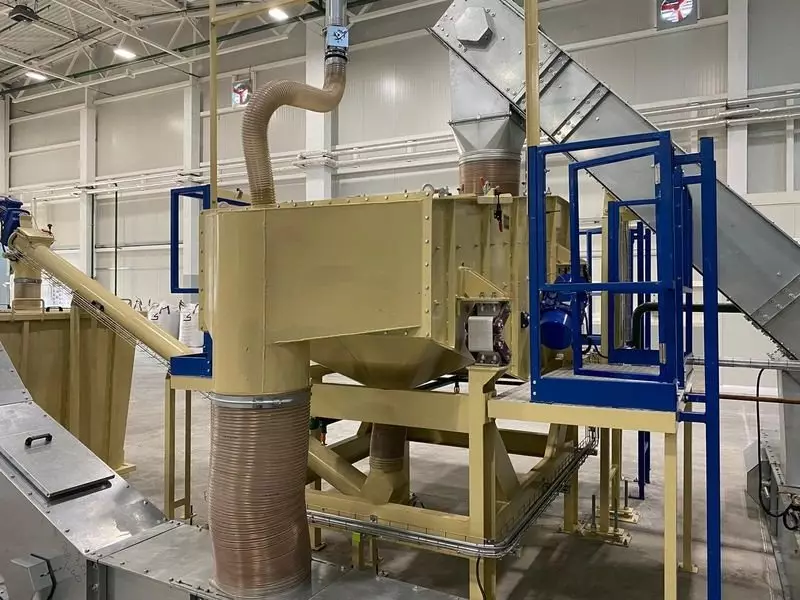
What characterizes modern screens?
Modern screens are equipped with convenient control panels, which are placed in control cabinets, as well as a series of systems that improve their operation, such as shock absorbers or fans. The safety systems used in screens should be adapted to the type of material and the machine’s operating conditions. Modern screens work quickly and almost failure-free; some achieve a capacity of 25 t/h.