
Currently, an increasing number of people are deciding to use biofuels instead of traditional fuels. One of the most popular forms of biomass (i.e., waste and residues from the agricultural, forestry, furniture industries, etc., which decompose relatively easily) is pellets.
Pellets have the shape of small, cylindrical granules; in households, they are used for heating pellet stoves or fireplaces. Their undoubted advantage is high calorific value and the fact that their combustion produces a negligible amount of ash, which allows for maintaining cleanliness in home boiler rooms.
Selection of appropriate raw materials, cleaning, and shredding of the input material
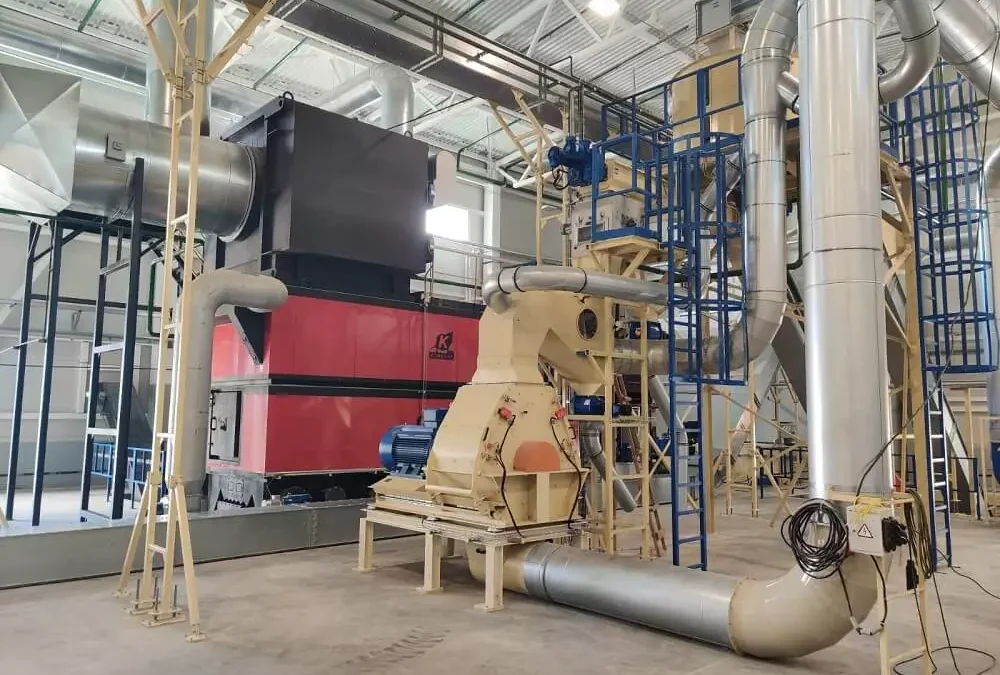
For the production of pellets, raw materials from both deciduous (hardwood) and coniferous (softwood) trees can be used; usually, the majority of the raw material intended for pellet production is softwood (about 70%). The moisture content of wood chips or sawdust cannot exceed 10% (otherwise, the granulation process will be significantly hindered). The first step that must be performed before starting granulation is cleaning the material (for example, from sand or pieces of metal), which can be done using special sieves and magnetic separators. In the subsequent stages of work, it will be necessary to use specialized machines and equipment. The shredding of the previously cleaned raw material takes place in a hammer mill, and then it is separated from dust and other fine impurities in a cyclone. The goal of the shredding process is the maximum homogenization of the processed biomass fraction.
Shredding and pressing
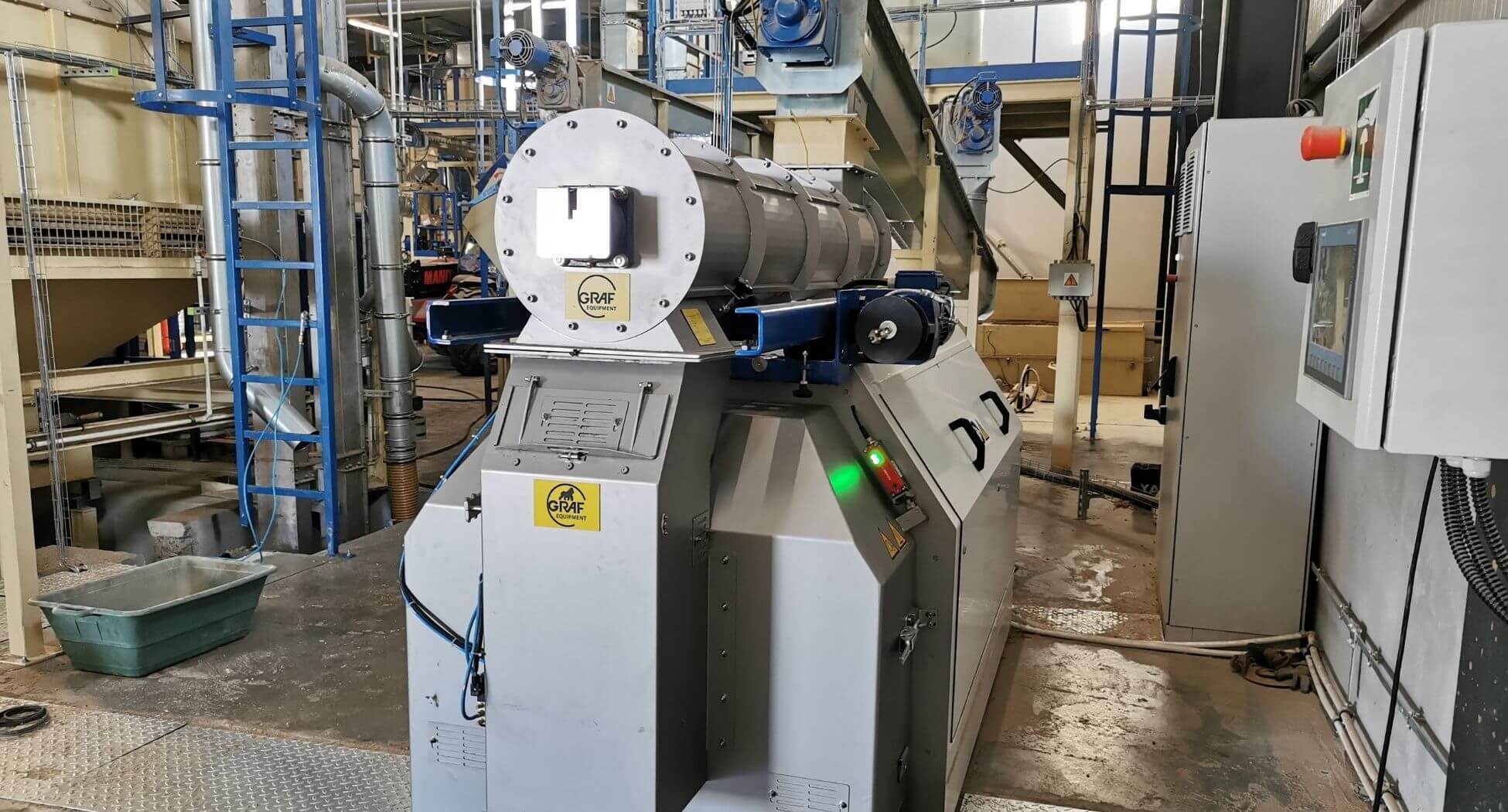
The material initially shredded in the hammer mill is cleaned again and re-shredded. The raw material prepared in this way goes to the next stage of production, which is the final preparation of the material for granulation. This results in the stabilization and maintenance of the moisture content of the material fed to the granulating section at the level of ± 0.5%, as well as the dosing of an appropriate amount of binder (e.g., corn flour), which has a significant impact on improving the physicochemical properties of the final product. Only material prepared in this way can be fed into the granulating press. It is precisely here that the granulation of the raw material takes place, which means giving the biomass its final granular form, usually with a diameter ranging from 6 to 8 millimeters and a length of about 2-3 centimeters.