
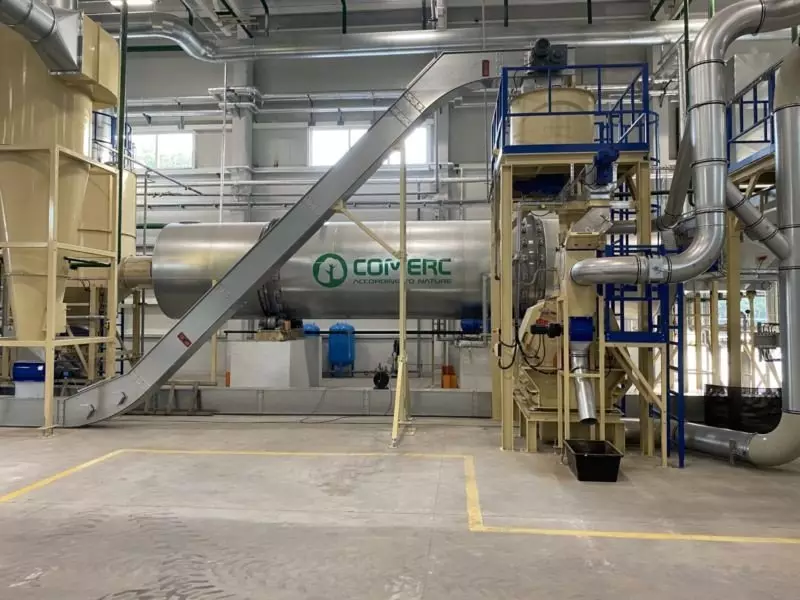
Drum or belt dryers are usually used for the production of pellets and briquettes, although other types of devices are also available on the market. Below we discuss the characteristic features of various types of dryers.
Types of dryers used in pellet and briquette production
2
3
Popular types of dryers
Proper drying of biomass has a significant impact on the course of subsequent stages of the production process and the quality of the final product. Natural drying methods are slow and dependent on weather conditions; additionally, biological decomposition of the material may occur during drying. To achieve good results, special devices are used that perfectly prepare the raw material for further processing. The most commonly used are:
- drum dryers – popular dryers for bulk materials. Their operation is based on the work of a rotating drum with blades or a rotor that moves the raw material toward a fan. Hot air is blown from an air furnace into the drum. The downside of this type of dryer is the tendency for sawdust mineralization and its oxidation at too high a temperature. This problem can be solved by using heat exchangers;
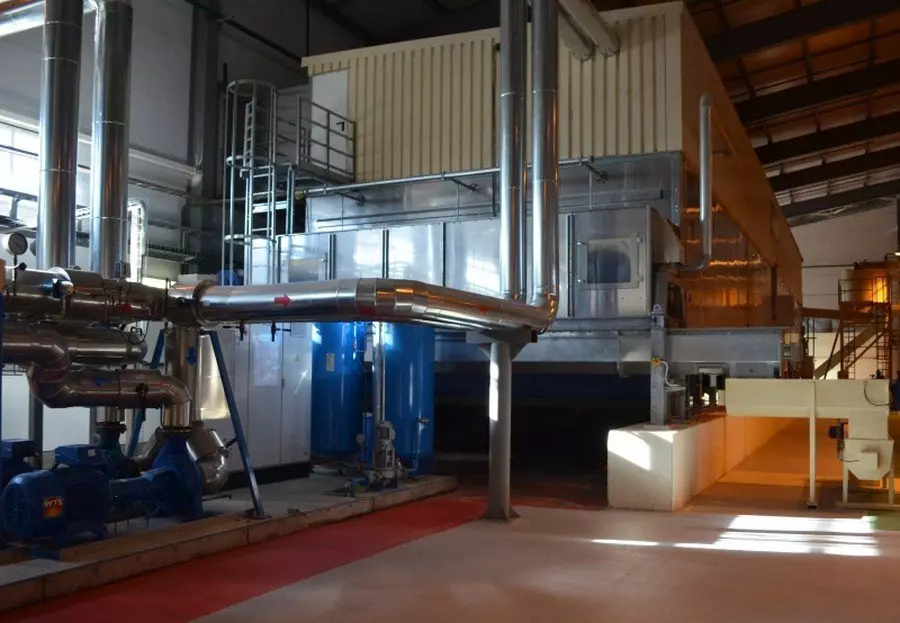
- belt dryers – dryers built with a moving belt onto which hot air or fluid is blown at many points. During transport, the raw material can be moved by the vibratory motions of the belt;
- solar dryers – utilize natural drying processes or energy from a photovoltaic installation. They can be used where the water vapor pressure in the air is lower than the saturation point;
- pneumatic dryers – the raw material is introduced into a pipeline where it is caught by the drying agent (hot air, steam);
- fluidized bed dryers – their work involves supplying gas/air to a perforated deck where the product is located, creating a fluidized bed which, by acting on the product, causes it to dry.