
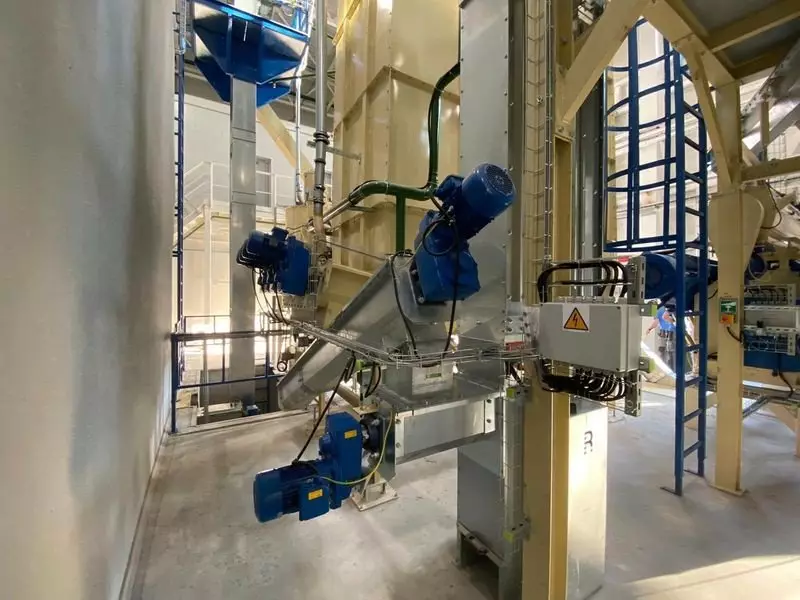
Screw conveyors are incredibly versatile devices used in many branches of industry. Their primary task is to transport various bulk materials, such as sawdust, wood chips, or pellets. If you would like to take a closer look at what other materials can be transported using screw conveyors and what design features these devices possess, we invite you to read this article!
Construction of Screw Conveyors
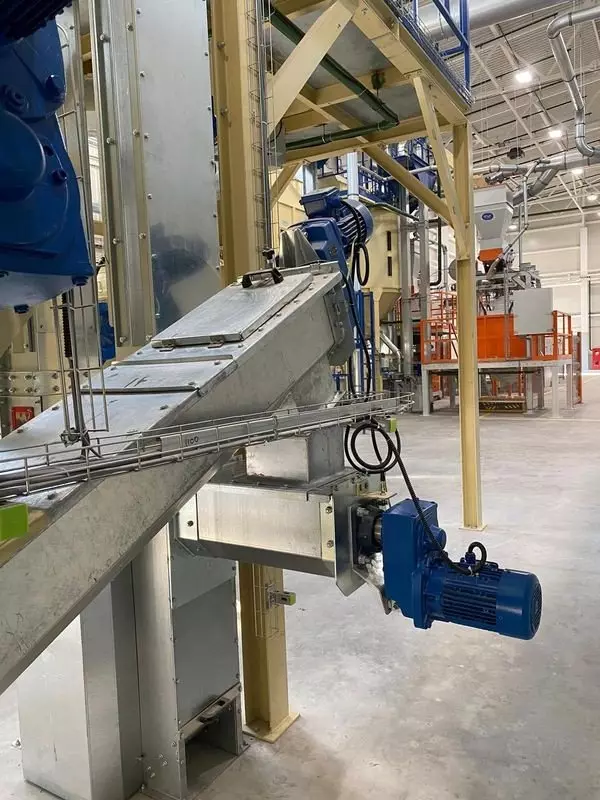
Screw conveyors are characterized by a robust design and the high quality of the materials used. Their body is made of structural steel coated with a special finish that provides excellent corrosion resistance. The screw flight, which is the key component of the conveyor, is constructed from a heavy-walled steel tube.
A 10 mm thick screw flight is welded to the tube, which is responsible for transporting the bulk materials. Additionally, screw conveyors are equipped with rotation speed sensors and inspection openings with overflow control sensors.
Application of Screw Conveyors in Various Industries
Screw conveyors, also known as auger feeders, are used in many fields of industry. Their design can be adapted to the specific requirements of a given sector whenever the need arises. An example of this is the use of these devices in pellet production lines. In this case, screw conveyors ensure a stable and uniform feeding of raw material to the next stage of production.
Types of Materials Transported on Screw Conveyors
Screw conveyors are primarily designed for transporting various types of bulk materials. These include materials such as sawdust, wood chips, and pellets, which are frequently used in the wood, energy, and agricultural industries.
Furthermore, by appropriately adapting the conveyor’s design, it is also possible to transport other bulk materials, such as cereal grains, coal, or aggregates. Consequently, screw conveyors represent an exceptionally universal and reliable solution for various branches of industry.