
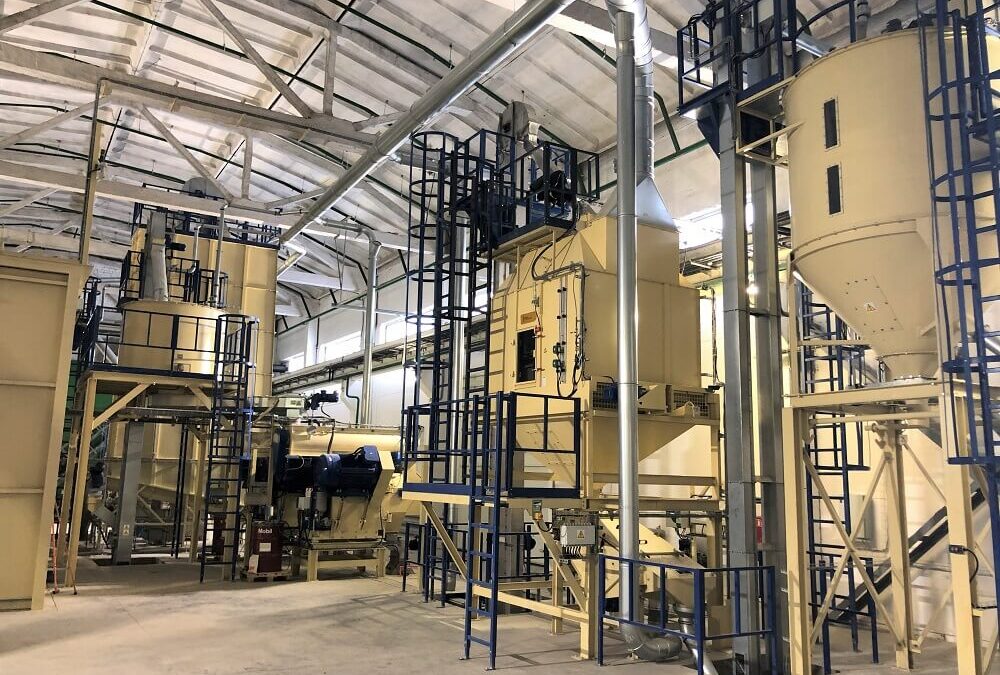
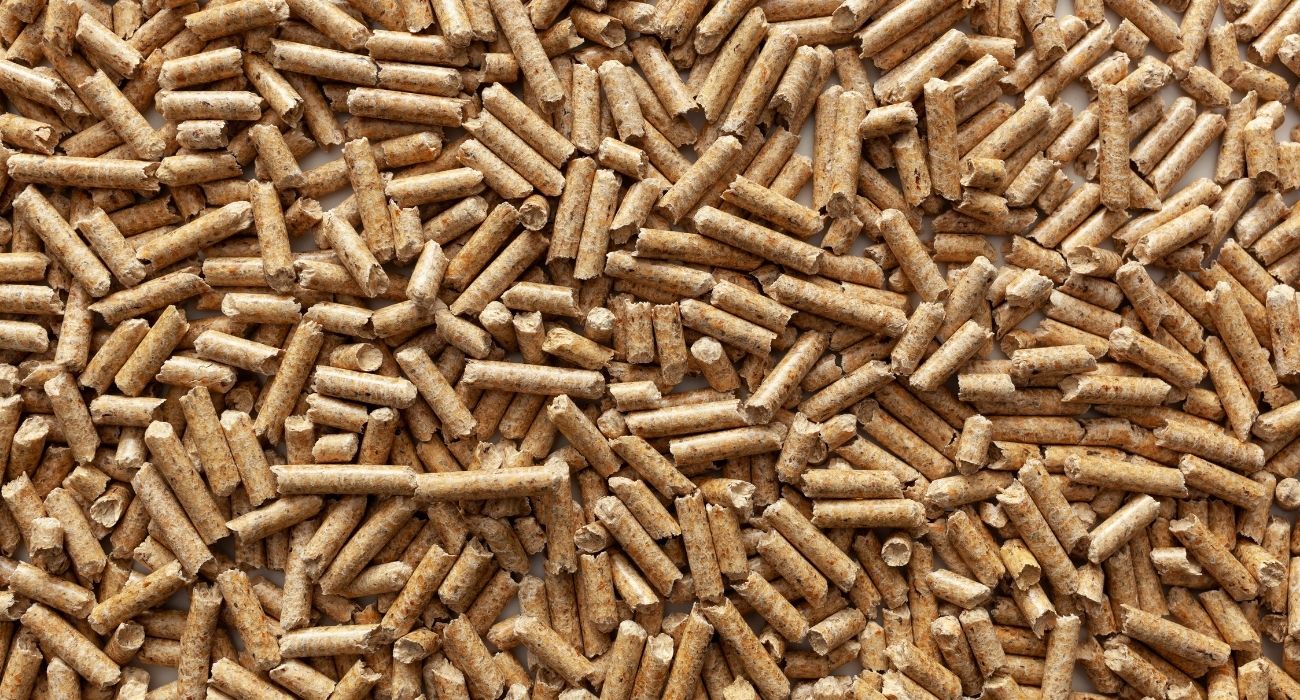
Pellet is a valued heating material, and with the growing popularity of boilers and stoves powered by it, the interest in purchasing it is increasing. A great advantage of pellet is the fact that its production can utilize, among other things, residues from the woodworking or carpentry industry. To obtain a good quality final product, which will be characterized by appropriate calorific value and hardness, the technological process of its production must be properly carried out and controlled. One of the most important stages of pellet production (and at the same time one of the final ones) is lowering its temperature using a special pellet cooler. Let’s take a closer look at its operation and see why its use is necessary in the pellet production process.
Why does pellet need to be cooled?
Pellet is formed as a result of compressing appropriately shredded, cleaned, and dried material (most commonly sawdust and wood chips) under the influence of elevated temperature, obtained by the application of steam, and thanks to the increased pressure achieved through mechanical pressure on the material during its granulation. However, the granules formed in the process described above must be properly cooled in the next stage of production, so the final product will be harder and will not break or crumble.
What are the benefits of using pellet coolers?
The use of a pellet cooler allows for a significant acceleration of its cooling process. Thanks to them, pellets can be produced continuously, as there is no need to wait for the product’s temperature to decrease on its own. Due to the integration of a pellet cooler into the production line, the entire technological process is fully complete.
How does a pellet cooler work?
A mechanical pellet cooler is a device that generates high negative pressure using efficient fans. This allows for the suction of an air stream, which, by passing through the layer of the cooled material and through convection, is able to extract a significant amount of heat. After cooling, the produced pellet is ready for packaging and transport.