
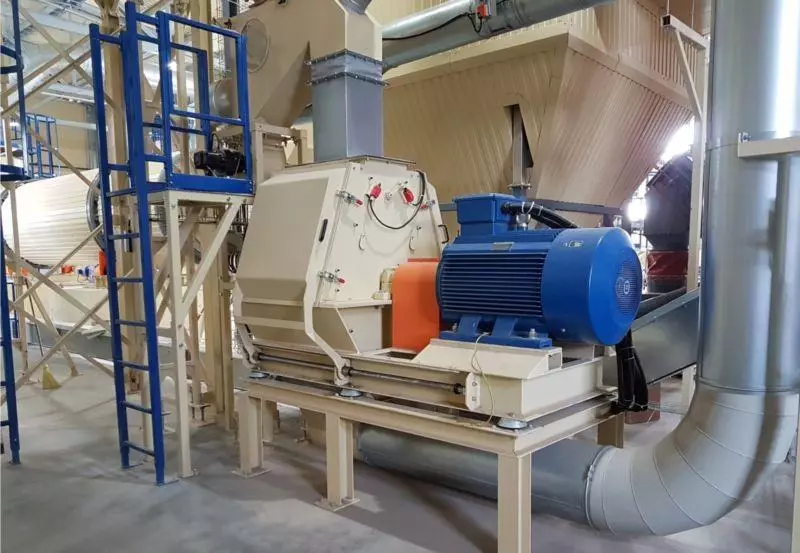
In an era of growing environmental awareness and the search for alternative energy sources, increasing attention is being paid to biomass as a heat source. Pellets and briquettes are among the commonly used fuels derived from biomass. This is exactly why there is a need for continuous optimization of their production process to ensure price competitiveness compared to other energy sources. What impact do hammer mills have on this? We have the answers.
Hammer mills – what are they?
Hammer mills are a type of device used for grinding raw materials into smaller particles. They are particularly effective for milling wood, straw, or other lignocellulosic materials. These machines utilize a rotating drum with mounted hammers that strike the raw material until it reaches the desired level of fragmentation. Thanks to this process, hammer mills produce a homogeneous material that can be further processed into pellets or briquettes.
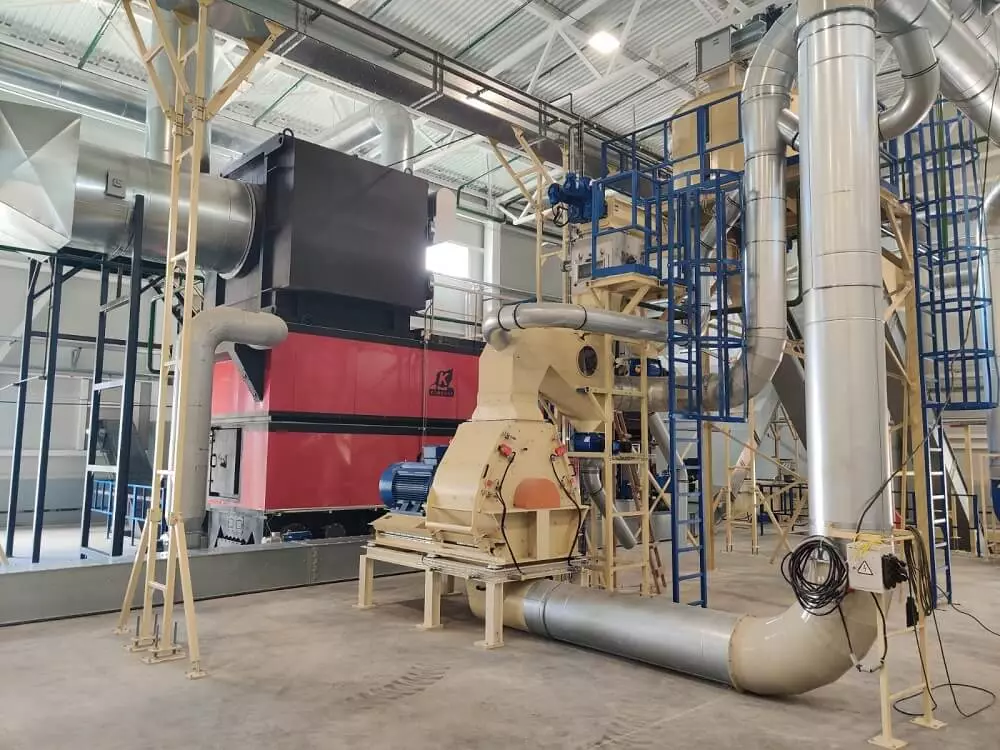
Reduction of energy costs
One of the main factors contributing to the reduction of pellet and briquette production costs when using hammer mills is their higher energy efficiency compared to other types of mills. Hammer mills are characterized by lower energy demand relative to the volume of processed raw material. This means they consume less electricity, which directly translates into lower production costs.
Reduction of material losses
Hammer mills are designed to minimize raw material losses during the grinding process. The efficient operation of the hammers allows for precise material fragmentation while limiting scattering and waste. Retaining more raw material within the production process directly leads to cost reductions and increased efficiency.
The adaptability of hammer shredders to various raw materials is also a crucial factor. They enable the processing of materials with both soft and hard. This allows pellet and briquette producers to utilize diverse types of biomass, providing them with the flexibility needed to adapt to changing market demands.