
Innowacyjna energetyka
Elektrociepłownia LiPRO HKW300
Zgazowanie drewna w innowacyjnej technologii kogeneracji opartej na procesie pirolizy biomasy. Moc elektryczna 85 kW | moc cieplna 198 kW.
Maksymalna wydajność i niezależność energetyczna Twojego zakładu
System LiPRO HKW300 to serce nowoczesnej gospodarki o obiegu zamkniętym w przemyśle drzewnym. Dzięki zastosowaniu procesu aktywnej pirolizy instalacja przekształca standardową zrębkę w dwa najcenniejsze dla zakładu media: energię elektryczną oraz wysokotemperaturowe ciepło procesowe.
To rozwiązanie zaprojektowane z myślą o firmach, które chcą realnie obniżyć koszty operacyjne, wykorzystując własny surowiec lub tanią biomasę do uzyskania całkowitej niezależności od wahań cen rynkowych prądu i gazu.
W dobie transformacji energetycznej inwestycja w to urządzenie gwarantuje skokowy spadek kosztów i długoterminowe bezpieczeństwo
Model HKW300 maksymalizuje uzysk darmowej energii przy zachowaniu niezwykle kompaktowych gabarytów instalacji, a generowany czysty gaz drzewny może być bezpośrednio wykorzystywany w innych procesach technologicznych na terenie zakładu
85 kW
znamionowa moc elektryczna brutto
198 kW
użyteczna moc cieplna
550 ton
szacunkowe roczne zapotrzebowanie na suchą zrębkę
Zgazowanie drewna i technologia aktywnej pirolizy
Elektrociepłownia LiPRO HKW300 opiera swoje działanie na innowacyjnym, wielostrefowym reaktorze, w którym proces zgazowania drewna został precyzyjnie podzielony na trzy niezależne etapy: pirolizę, utlenianie oraz redukcję
Co więcej, zastosowane w instalacji wydajne filtry tkaninowe wyłapują pozostałości węglowe, które są automatycznie zawracane do cyklu spalania, co pozwala na pełny odzysk energii z każdej tony biomasy i drastyczne zmniejszenie ilości popiołu
Architektura i moduły elektrociepłowni LiPRO HKW300
Poniższe zestawienie wyjaśnia strukturę nazewnictwa oraz rolę poszczególnych podzespołów wchodzących w skład kompletnej instalacji.
-
HKW300 (elektrociepłownia): kompletny, nadrzędny system wytwarzania energii elektrycznej i cieplnej w skojarzeniu, który integruje wszystkie poniższe moduły w jeden działający organizm.
-
HGW300 (moduł zgazowania): reaktor instalacji, w którym zachodzą opisane wyżej procesy termiczne przekształcające zrębki w czysty gaz syntezowy.
-
HGM300 (jednostka kogeneracyjna CHP): zespół prądotwórczy składający się z silnika gazowego w cyklu Otto oraz generatora synchronicznego, gdzie energia chemiczna zamieniana jest na prąd i ciepło.
-
HGF200/300 (pochodnia gazowa): zamknięty układ z palnikiem pilotowym do bezpiecznego, ekologicznego spalania gazu podczas faz przejściowych (rozruch i zatrzymywanie instalacji).
-
E-Control 300 / E-Control 50 (szafa sterownicza): rozdzielnica pełniąca funkcję centralnego systemu zarządzania i synchronizacji, wyposażona w dotykowy panel przemysłowy i dostęp zdalny.
-
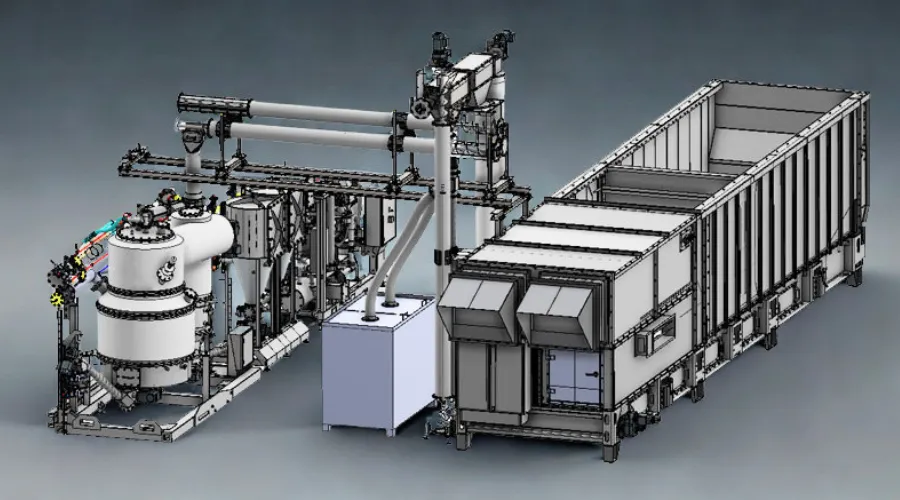
Suszarnia podłogowa LiPRO CFD: maszyna z ruchomą podłogą służąca do obniżania wilgotności zrębki (poniżej 10%) ze zintegrowaną sekcją sitową do odseparowywania pyłu oraz nadziarna.
-
Zintegrowany system transportu paliwa: przenośniki ślimakowe podające w pełni automatycznie wysuszoną zrębkę z suszarni bezpośrednio do modułu zgazowania HGW300.
-
System usuwania popiołu (odpopielanie): układy odpowiadające za odbiór pozostałości, wychwytujące resztki z filtrów, dopalające je na ruszcie i wyrzucające do zintegrowanego pojemnika.
-
LiPRO Mobile Cube (obudowa kontenerowa): ustandaryzowany kontener przemysłowy, wewnątrz którego fabrycznie montowana jest cała instalacja, co umożliwia jej bezpośrednie uruchomienie po dostarczeniu na teren zakładu.
Wymiary i waga modułu zgazowania HGW300
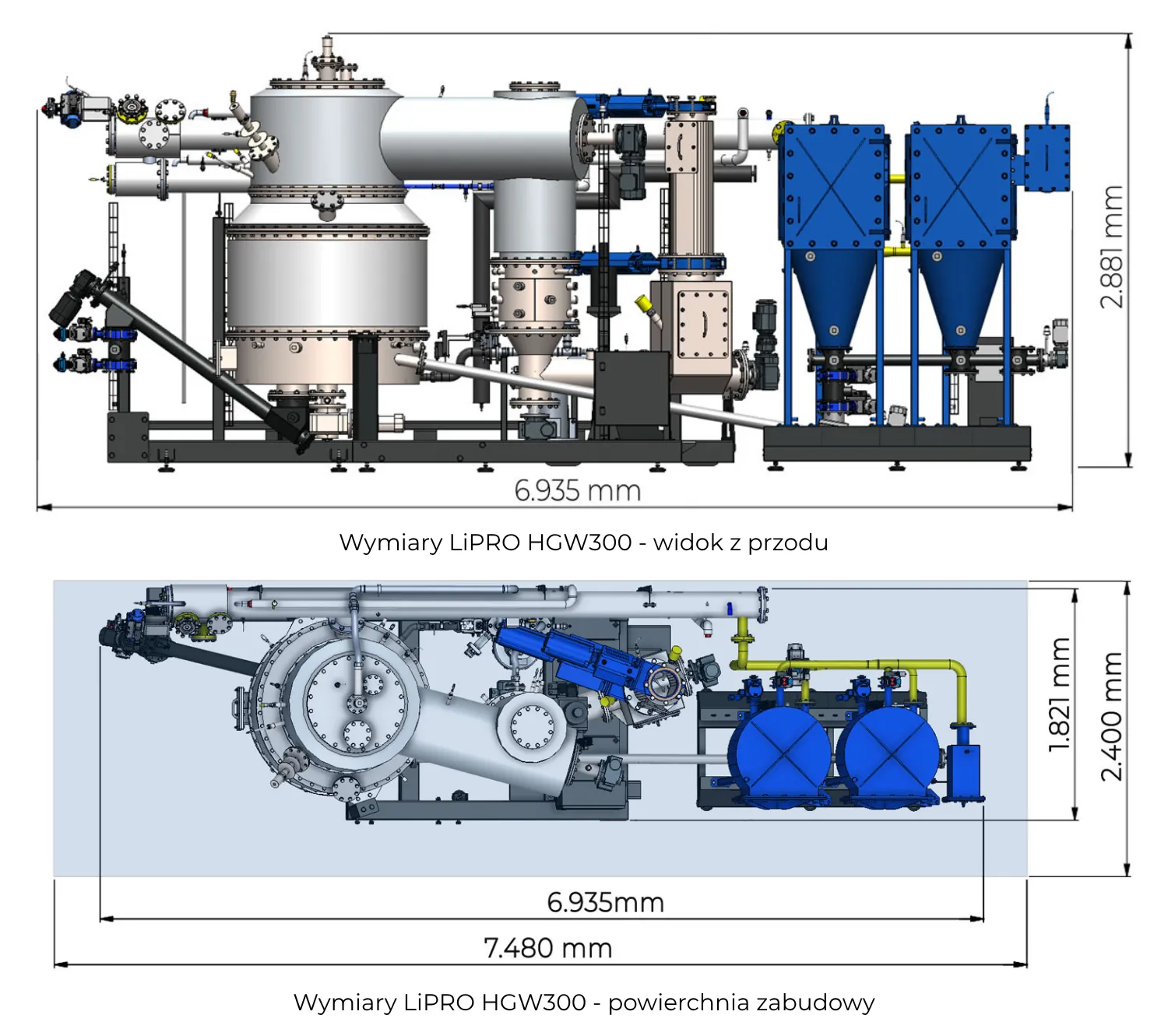
Untitled
* Wysokość stopek wynosi co najmniej 60 mm<br /> ** Wymóg dotyczący wysokości odnosi się wyłącznie do obszaru nad ślimakiem pirolitycznnym (nie dotyczy całej powierzchni pomieszczenia)
Elektrociepłownie
Elektrociepłownie na biomasę
Suszarnie
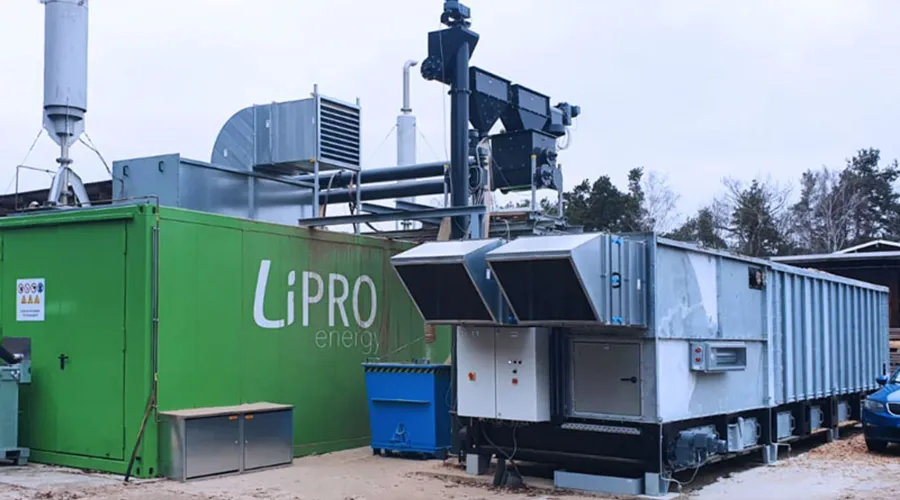
Suszarnie podłogowe – LiPRO CFD
Elektrociepłownia LiPRO HKW300 – najczęściej zadawane pytania
Jaką wilgotność musi mieć wsad do reaktora HKW300?
Aby proces pirolizy przebiegał z maksymalną wydajnością, biomasa musi być sucha i jednorodna. Wilgotność surowca nie powinna przekraczać 10 procent. Dobrą praktyką jest zintegrowanie układu z suszarnią ciągłą LiPRO CFD, która skutecznie przygotowuje surowiec, wykorzystując w tym celu darmowe ciepło odpadowe z instalacji.
Czy pomagacie w formalnościach środowiskowych?
Tak, zapewniamy pełne wsparcie inżynieryjne na każdym etapie prowadzonej inwestycji. Pomagamy dopasować technologię do lokalnych przepisów i doradzamy, jak sprawnie przejść przez procedury uzyskiwania niezbędnych pozwoleń środowiskowych dla planowanej instalacji kogeneracyjnej.
Jak wygląda kwestia hałasu i emisji spalin?
Zastosowana technologia zgazowania biomasy charakteryzuje się bardzo niską emisją. Zawartość szkodliwych substancji w spalinach jest śladowa, a powstający popiół praktycznie nie zawiera węglowodorów aromatycznych. Sama konstrukcja jest solidnie wygłuszona, co pozwala bez trudu spełnić rygorystyczne normy przemysłowe dla zakładów produkcyjnych.
Czy elektrociepłownia zmieści się w istniejącej hali produkcyjnej?
Konstrukcja instalacji została zaprojektowana z myślą o oszczędności miejsca. Należy przy tym pamiętać, że wymagana powierzchnia montażowa o wymiarach około 7,5 na 2,4 metra dotyczy jednostki HGW300. Jeśli wysokość wybranego pomieszczenia wynosi mniej niż 5,5 metra, system logistyki i zasypu surowca można bez problemu zintegrować, wykorzystując do tego odpowiedni otwór w stropie hali.
Linie produkcyjne pelletu