
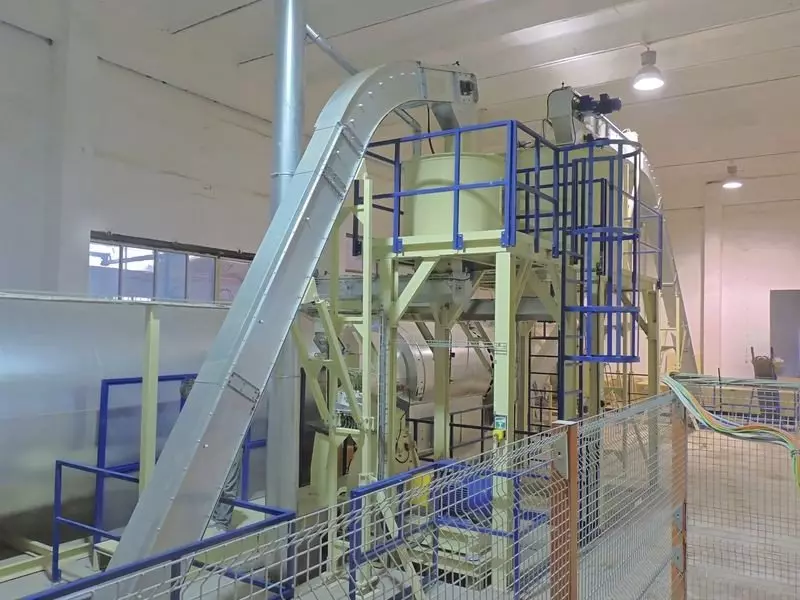
The development of technology and industry leads to a continuous search for effective and reliable solutions in the transport of bulk materials. One such solution is chain conveyors, also known as drag conveyors or scraper conveyors. Due to their design and wide range of applications, they are an indispensable element of many technological lines. In this article, we will take a closer look at their operation and construction.
The Drive Section – The Heart of the Conveyor
The key element of every chain conveyor is its drive section, which is responsible for the proper functioning of the entire device. In the redler model, this section is equipped with a drive and gear units from NORD, which guarantees high quality and operational reliability.
Furthermore, the drive section features a rotation speed sensor and an inspection opening with an overflow sensor. This allows for real-time monitoring of the conveyor’s operation and enables a quick response to any potential irregularities.

The Tensioning Section – A Guarantee of Stability
Chain conveyors must be equipped with an appropriate tensioning section that ensures constant tension of the transport chain. This makes it possible to maintain the optimal operation of the conveyor and eliminate the risk of downtime resulting from chain-related issues. The design of the redler model’s tensioning section guarantees reliable operation and a long service life for the entire device.
Intermediate Sections – Design Flexibility
Depending on the specific needs and conditions of a given technological line, chain conveyors can be tailored to individual customer requirements. Standard intermediate sections have lengths of 1,900 mm and 1,950 mm, though it is also possible to manufacture them in non-standard lengths.
The bottom of the conveyor is lined with an antistatic, wear-resistant material with a thickness of 10 mm, which ensures low noise levels and high resistance to abrasion. Additionally, a slide-guide is mounted to the bottom of the conveyor to ensure the correct alignment of the chain and to prevent the scrapers from rubbing against the side walls of the device.