
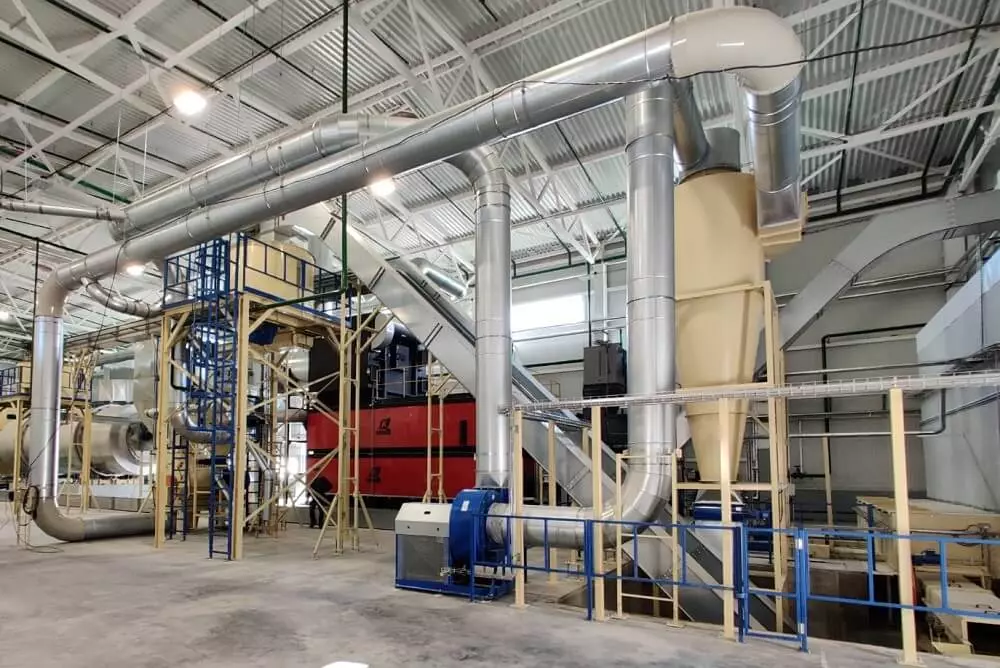
Growing environmental awareness, the drive to improve air quality, and the urgent need to reduce harmful emissions are fueling the rising popularity of renewable energy sources (RES). As a result, these sustainable alternatives are steadily replacing traditional fossil fuels.
Alongside solar and wind power, biomass energy is gaining significant traction, largely because it integrates seamlessly into existing central heating systems. Among the various biomass options, wood pellet stands out for its exceptional energy efficiency. It offers a highly economical heating solution, generating heating costs comparable to traditional fuels like coal or eco-pea coal. Wood pellet can be manufactured on a large industrial scale for commercial distribution, or on a smaller scale for internal, self-sustaining use. Today’s market offers a wide array of solutions for building pellet production lines, providing extensive flexibility regarding throughput capacity, automation levels, pricing, and the specific brands of machinery utilized. Consequently, pellet is produced not only in massive, specialized facilities but also by smaller businesses looking to monetize their available wood waste—such as sawmills, carpentry workshops, and manufacturers of wood-based panels or furniture.
Let’s take a closer look at the key advantages of wood pellet production, explore the manufacturing methods, and identify the crucial parameters you need to consider when selecting a pellet production line.
Perspectives and profitability of pellet production
The popularity of wood pellet as a heating fuel stems from the growing consumer demand for an accessible, cost-effective, and environmentally friendly energy source. Pellet efficiently power domestic central heating systems without requiring the massive upfront investments associated with equipment like heat pumps. This surge in popularity is also heavily driven by regulations regarding central heating boilers, which must now comply with rigorous EcoDesign emission standards. Consequently, the market availability of traditional log and split-wood burning stoves has become significantly limited, pushing consumers toward cleaner alternatives. The sheer convenience of pellet heating cannot be overstated. Modern pellet boilers are equipped with high-capacity fuel hoppers and automated feeding systems that deliver pellets directly into the combustion chamber. This automation allows users to go for days—or even weeks—without needing to visit the boiler room.
Furthermore, wood pellet boasts an excellent energy profile. Depending on the raw material used, users can achieve an impressive calorific value of up to 19 MJ/kg. Additional key advantages include minimal ash generation, a low tendency for clinker (slag) formation, and the added benefit that the residual ash serves as a highly effective natural fertilizer. Versatile packaging options further drive the use of wood pellet. Standard small bags are ideal for manually refilling typical, lower-capacity boiler hoppers, while large “big bags” (FIBCs) are perfect for automated bulk storage rooms or high-capacity industrial boilers.
Driven by this widespread use and the robust sales volume of pellet boilers, the market demand for wood pellet remains consistently high. This strong consumer preference makes pellet manufacturing a highly lucrative venture. Investing in a professional pellet production line offers a relatively rapid return on investment, often generating substantial profits within just a few years of commissioning.
What Equipment Makes Up a Complete Pellet Production Line?
The pellet manufacturing process is highly complex. It demands strict adherence to technological standards and, most importantly, the use of reliable, high-performance equipment to guarantee a premium end product. When setting up your facility—depending on your production goals and the specific raw material available—you can either purchase individual machines or invest in a complete, turnkey pellet production line. The turnkey approach is significantly more advantageous: it ensures the seamless integration of all mechanical components and enables full or partial process automation. Crucially, sourcing an entire line from a specialized manufacturer guarantees exceptional build quality and ensures you receive comprehensive technical support—during the warranty period, post-warranty, and in the event of any unforeseen breakdowns.
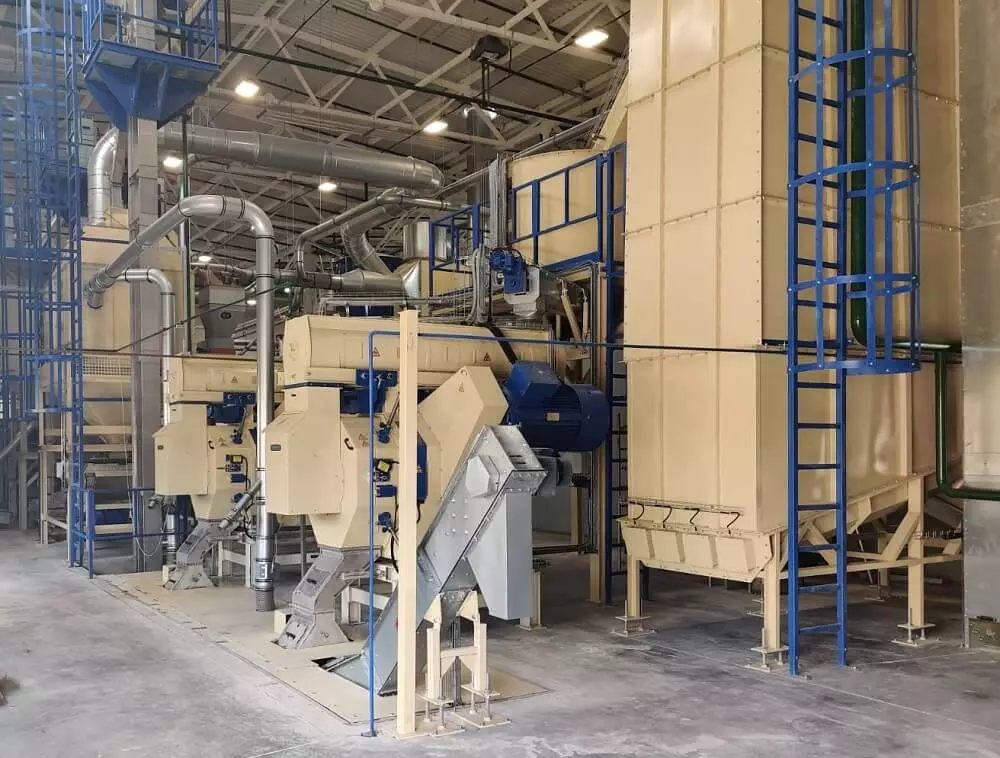
The complete production cycle consists of several distinct stages, each requiring specialized machinery. The primary stage of wood pellet production always involves the preliminary size reduction of the raw material. Whether your line needs to be equipped with industrial chippers depends entirely on the initial state of your feedstock. If you are utilizing ready-made sawdust or wood shavings, this preliminary chipping stage can be completely bypassed. The next critical step is purifying the feedstock. This involves extracting any foreign objects (like stones or metal) that could severely damage the machinery downstream. Vibration and magnetic separators are typically employed for this vital task.
The pre-crushed and cleaned raw material is then conveyed to the drying section. Here, drum or belt dryers reduce the moisture content to an optimal 8-10%. Drum dryers often operate at much higher temperatures—sometimes reaching several hundred degrees—utilizing hot air or steam as the drying medium. Continuous, automated temperature monitoring is absolutely critical during this phase to enable immediate responses to emergencies and to trigger integrated fire protection systems.
Once dried, the material is prepped for granulation. A conditioner stabilizes the moisture at a precise target level. Inside the conditioner, the material may be slightly hydrated, and a binder is often introduced to facilitate smoother extrusion and enhance the structural durability of the final pellets. The prepared feedstock is then fed into the granulator. Here, heavy-duty rollers compress and force the material through a specialized die matrix, shaping it and cutting it into uniform, dense pellets.
The newly extruded, hot pellets are immediately transferred to a pellet cooler. In this unit, the soft, pliable granules are efficiently cooled and hardened, ensuring safe bulk storage and the retention of their structural integrity. The finished pellets then pass through a screening machine to sift out any fine dust or unformed particles. Finally, the product is routed to the packaging line, where it is automatically bagged, palletized, and prepared for commercial dispatch.
It is important to note that a professional pellet production line also relies heavily on auxiliary equipment. This includes conveyor belts, material transport systems, industrial furnaces to power the dryers, and water supply installations. Furthermore, precise industrial sensors and advanced, comprehensive automation systems are absolutely essential to synchronize, monitor, and flawlessly control the operation of all individual components and machines.
What should be considered when choosing a pellet production line?
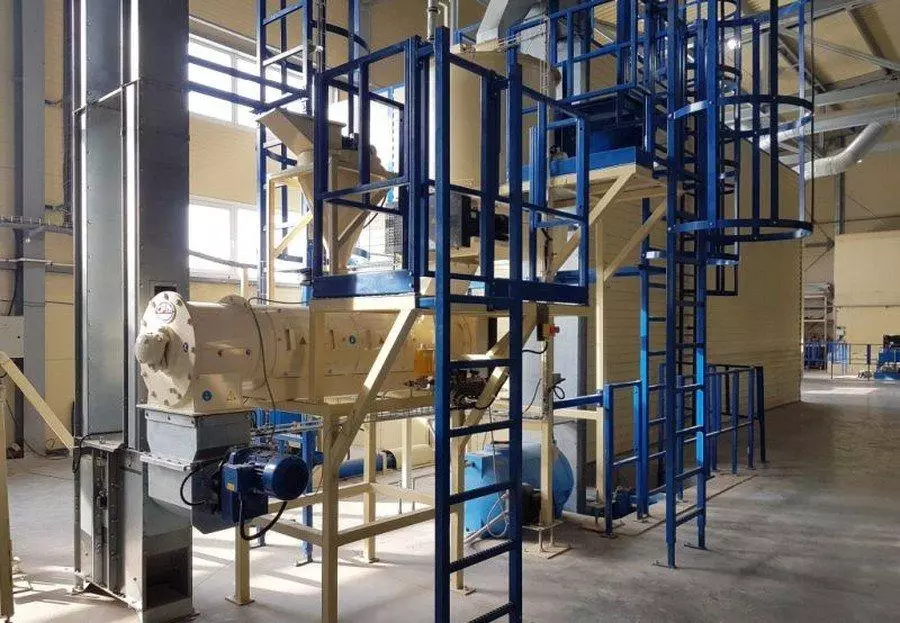
The choice of a suitable pellet production line must ensure adequate production profitability, but also guarantee the maintenance of all parameters necessary from the point of view of the manufacturing technology. Therefore, the operational parameters of the individual machines being combined, as well as the entire line, will be of great significance. Among the most important features is the line’s capacity, which determines production capabilities and simultaneously affects all other factors relevant to evaluating the profitability of the venture. The greater the capacity, the higher the achievable production level, but also the greater the energy consumption and raw material demand. It is worth remembering that when managing waste generated within the plant, the line’s throughput should be well-matched to its volume to avoid downtime. If increasing the amount of raw material is not an obstacle, the line’s capacity can be shaped freely, guided by the forecasted sales level and the size of the distribution network being served.
The size of the installation may also turn out to be a significant parameter – as it determines the cubic volume of the production hall needed to accommodate it. The ease of operating the equipment and the degree of automation of the entire process are also of great importance. The greater the number of devices operating without the need for employee intervention, the lower the employment costs. Automated production also means independence from human error and better possibilities for maintaining quality at the appropriate level. At the same time, all automated production systems require professional maintenance and servicing.
An equally important factor affecting the operational efficiency of the production line is the selection of individual devices. While assessing the suitability of individual machines in terms of their parameters is relatively straightforward, combining them into a smoothly functioning technological sequence requires a vast amount of knowledge about the entire process, as well as experience with specific solutions. In such a case, it may be crucial to use the services of a company offering comprehensive design and execution of entire lines. One must also not forget that, as with any manufacturing activity, quick and efficient service is essential, enabling inspections to be carried out and taking immediate action in the event of a breakdown.
The choice of a suitable pellet line must allow for the quickest possible return on investment, while also ensuring adequate equipment durability and the maintenance of the assumed quality level. The ability to minimize operating costs to the maximum will also be important. Therefore, when designing the line, the experience of the machine supplier, the energy efficiency of the equipment, ease of use, and a high degree of automation will be key factors.