
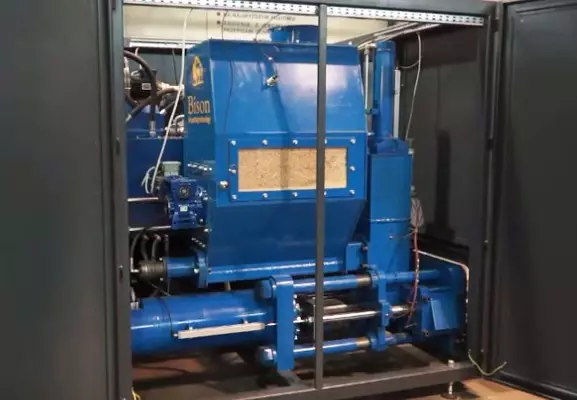
In an era of growing environmental awareness, more and more people are turning their attention to alternative energy sources. One of these is briquette, which is produced from wood waste, straw, or dried fruit. Briquetting presses play a key role in the production process by forming the material into the appropriate shape. It is therefore worth looking at the differences between the two main types of these devices – mechanical and hydraulic briquetting machines.
Types of Briquetting Machine Drives
Briquetting machines are divided into two main types based on the drive system – hydraulic and mechanical. In hydraulic briquetting machines, the pressing force is generated by a working fluid under high pressure, which allows for an exceptionally compact and durable briquette form.
In mechanical briquetting machines, on the other hand, the press is driven by an electric motor, which may make the pressing process slightly less precise than in the case of hydraulic devices. Nevertheless, the general principle of operation for both types of machines is similar and involves the pressure-molding of raw materials into fixed-size cubes or other shapes.
Efficiency and Energy Savings
Modern briquetting presses are characterized not only by reliability but also by energy efficiency. However, it is worth remembering that the output of such a device depends not only on its technical parameters but also on the type of material being processed.
In the case of hydraulic briquetting presses, the use of working fluid makes it possible to achieve higher efficiency while maintaining lower energy consumption. On the other hand, mechanical briquetting machines are usually simpler to operate and cheaper to purchase, which may be a significant factor for smaller enterprises.
An Example of High-Quality Briquetting Presses
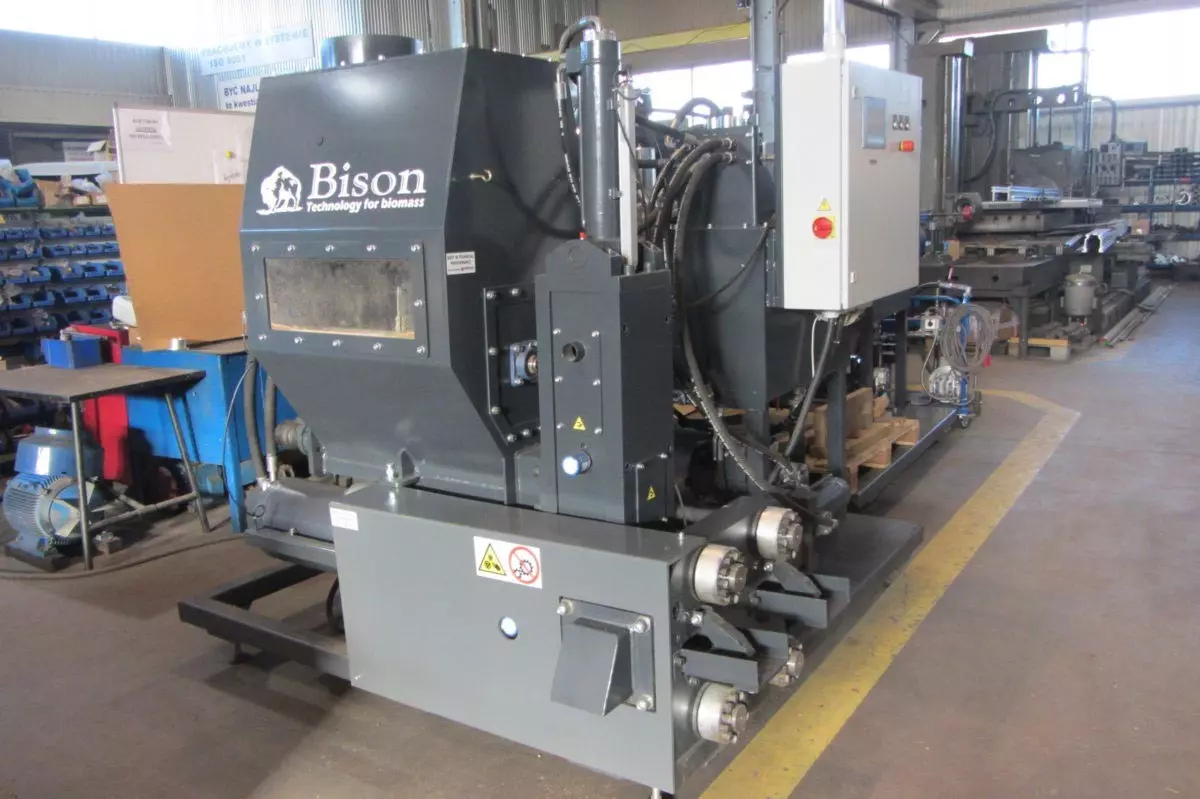
One example of high-quality briquetting machinery is the BISON BE series of briquetting presses. These devices are used for briquetting various types of biomass and are characterized by high durability and a low failure rate. Furthermore, machines in this series demonstrate low energy consumption while maintaining high production efficiency.