
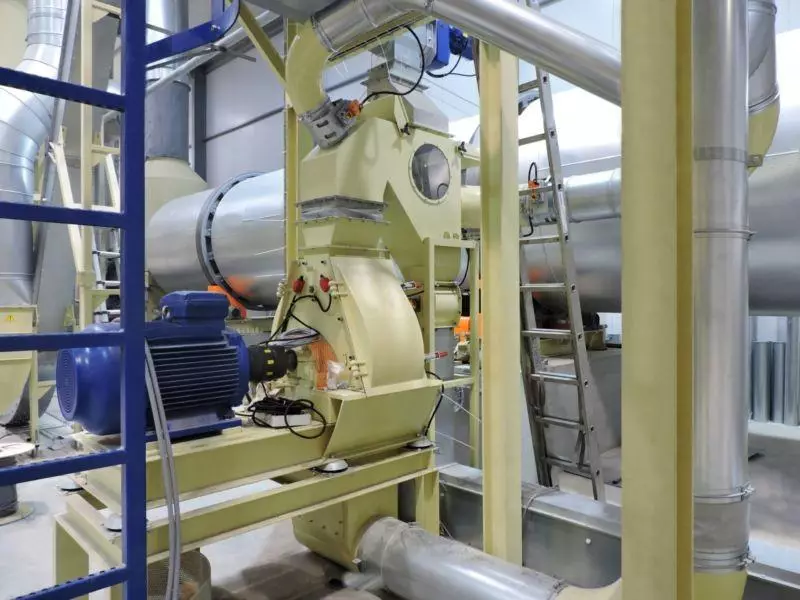
A hammer mill is an indispensable piece of equipment in the pellet manufacturing process. Its primary function is the grinding and size reduction of the raw biomass used to produce pellet. While this machine is capable of processing materials with varying moisture levels, it is important to note that it reaches peak operational efficiency when the feedstock moisture content is at or below 15%. So, how exactly does it work?
Hammer Mill Operation
The operational mechanics of this equipment are relatively straightforward. Biomass is transported via conveyors into the mill’s main grinding chamber. Here, the material is pulverized through the powerful impact of rotating hammers against the feedstock, combined with the feedstock colliding against the chamber walls. It is absolutely crucial that only clean, contaminant-free biomass enters the machine, as foreign objects can cause severe damage to the internal components. Once processed, the prepared raw material is conveyed to the subsequent stages of production, which typically begin with drying. It is also worth noting that hammer mills are available in a variety of structural designs. For instance, the CMB series mills feature an advanced design that ensures highly precise material grinding and delivers robust operational throughput capacities ranging from 2 to 10 t/h.
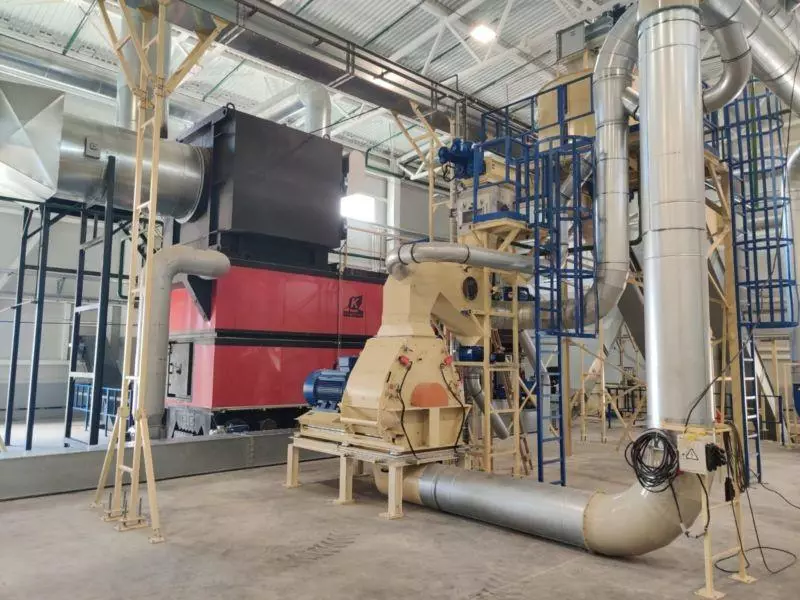
Key Benefits of Implementing Hammer Mills
Hammer mills significantly streamline the pellet manufacturing process, while their high throughput capacity directly reduces overall production costs. Thanks to their advanced engineering, these machines are highly versatile and can effectively grind a wide variety of raw materials, including straw, wood, stalks, and leaves. The robust construction features a reversible rotor and allows for the quick, hassle-free installation of hammers and screens, drastically speeding up component replacement. This ensures the machinery operates at peak performance with minimal downtime. Another crucial advantage is the exceptionally low vibration level during operation. As with all heavy industrial machinery, uncompromising safety standards are a top priority. Hammer mills have to be meticulously designed and manufactured to eliminate health and safety risks for operators, particularly during routine maintenance and servicing.