
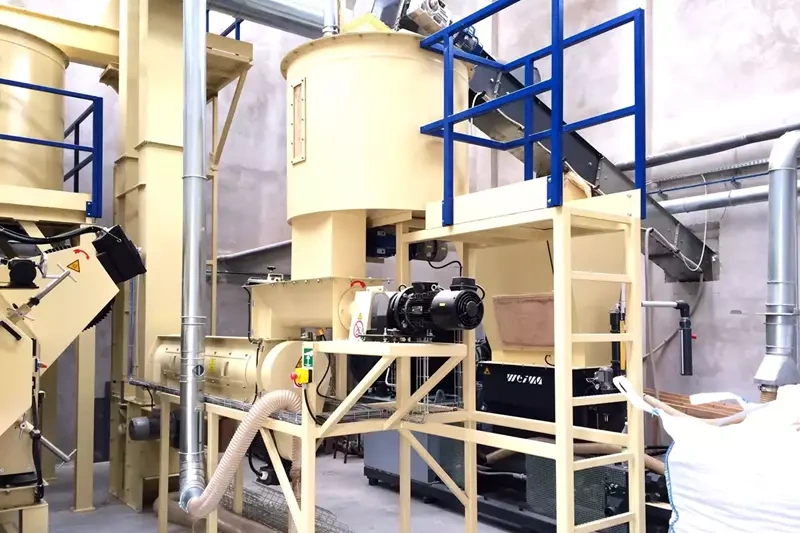
Pellet production is becoming increasingly popular due to the rising demand for eco-friendly energy sources. For this process to be efficient, it is essential to use the right machinery and equipment, including buffer tanks. Their presence streamlines production and allows for better control over individual stages. In this article, we explain how to select the appropriate buffer tank for a pellet production line.
Features of Buffer Tanks in Pellet Production
Buffer tanks play a crucial role in a pellet production line, enabling material storage at various stages and the precise dosing of raw materials to subsequent sections of the technological line. Thanks to them, the production process runs more efficiently, and operators have greater control over the volume and speed of material feeding. The use of buffer tanks minimizes the risk of improper operation of machinery and equipment, such as the pellet mill, while simultaneously reducing the failure rate of individual systems.
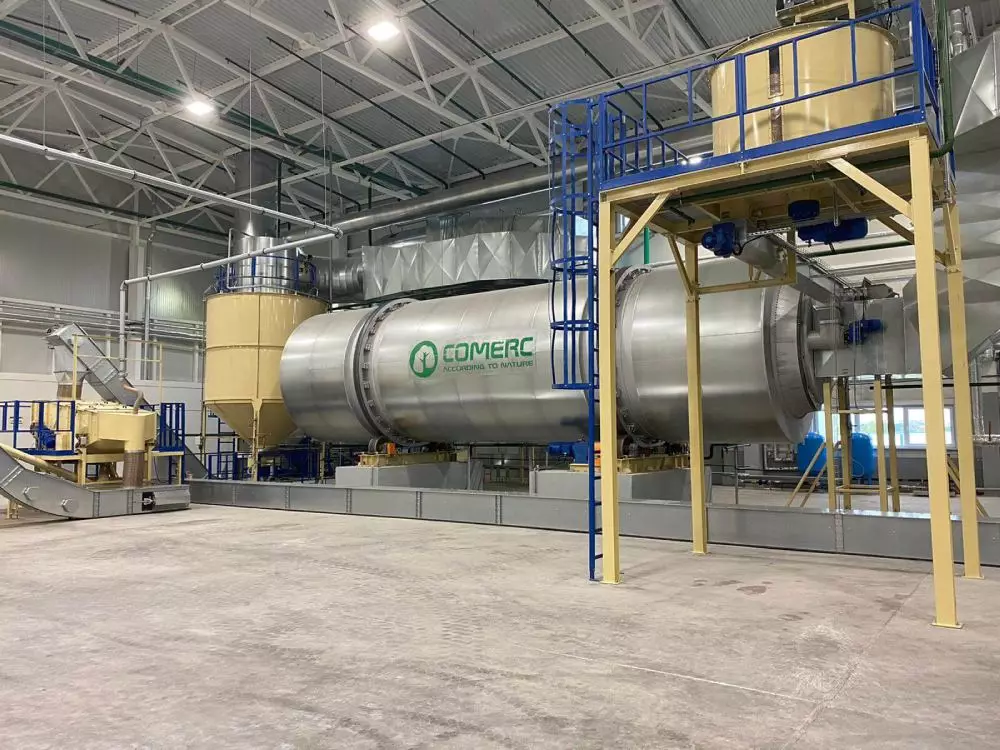
Machine Parameters and Buffer Tank Selection
The choice of an appropriate buffer tank should depend on the parameters of the other machines and equipment within the production line, especially the dryer and the pellet mill. To ensure an optimal fit for the buffer tank, it is worth consulting with an experienced manufacturer of pellet production lines. A professional advisor will provide guidance not only regarding the buffer tank but also on the type and parameters of other components of the line.
Consultation with a Pellet Production Line Manufacturer
As mentioned, the decision to choose the appropriate model should be made in cooperation with a manufacturer of buffer tanks and pellet production lines, who possesses the necessary knowledge and experience. Selecting the right tank is crucial, as it impacts both production efficiency and the quality of the final pellet.
By seeking expert assistance, you can avoid errors during the assembly of the production line and eliminate the risk of future problems. Furthermore, the manufacturer can provide advice on optimizing the performance of the entire production line, which translates into the ultimate efficiency of the process.