
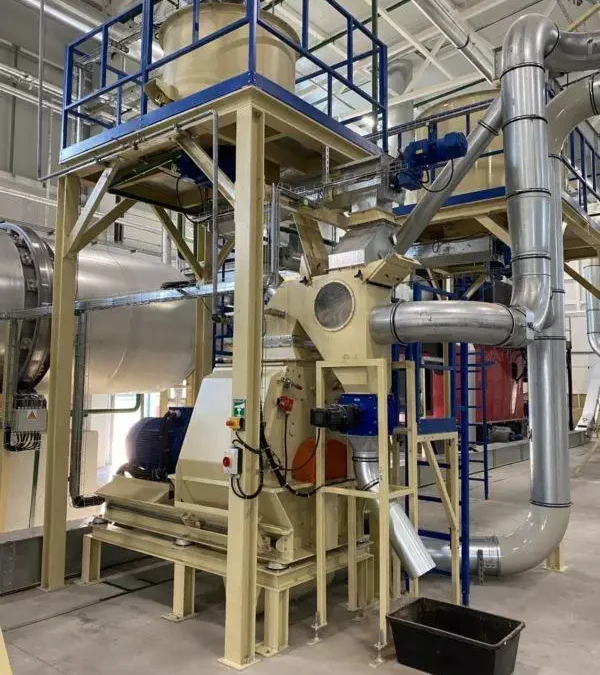
Obtaining energy in harmony with the natural environment is constantly gaining popularity. For this reason, biofuels produced from biomass—such as wood processing residues—are one of the sources for which demand is steadily growing. To make them useful, it is necessary to carry out appropriate technological processes, which require pellet or briquette production lines. One of the devices involved in this process is the hammer mill. How do they work, and what is their significance in pellet production?
What are hammer mills and how do they work?
Alongside drum dryers or coolers, hammer mills are among the most important devices involved in the pellet production process. The primary task of this equipment is to grind the biomass necessary for producing ecological fuel. The operating principle of this device is very simple. However, it should be emphasized that for the process to run smoothly and correctly, it is necessary to supply only clean biomass. Otherwise, damage may occur, resulting in operational downtime. The first stage is transferring the biomass to the main chamber of the mill, which is possible thanks to conveyors. The next step is grinding the material. This involves a process where the hammers strike the processed raw material as well as the walls of the device. Raw material prepared in this way can then be transferred for drying. It is also worth emphasizing that mills can operate on material with various moisture levels, though the optimal content is up to 15%.
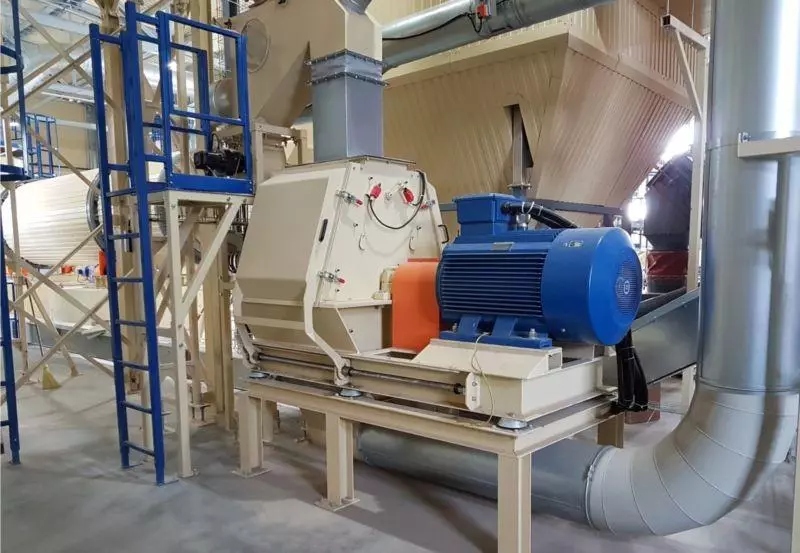
The benefits of professional hammer mills in pellet production.
Biofuel production companies often choose to invest in professional hammer mills due to the numerous advantages resulting from their use. Primarily, they significantly speed up and simplify the pellet production process. Another key factor, which is among the most important for many entrepreneurs, is the lower cost associated with biofuel production. This is due to the high capacity of the mills. It is also worth mentioning the ease of operation, low maintenance costs, and the fact that using the mill is entirely safe when basic health and safety principles are followed.