
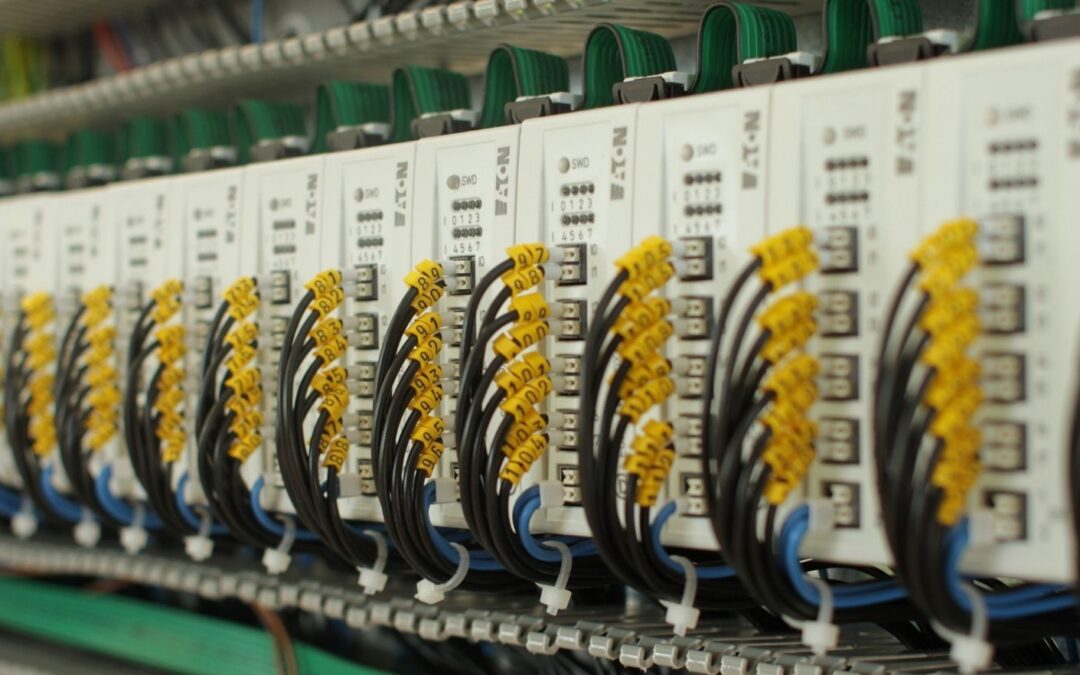
Control cabinets are specialized electrical devices used particularly often in various types of automation and power systems, as well as in industrial plants. These are usually structures featuring durable external housings made of metal, and control, distribution, and protection equipment inside. Such cabinets are complex structures that make it possible to supervise and control the operation of many diverse systems, and even entire production lines.
Control cabinets – characteristics
A control cabinet, as the name suggests, is a control unit that allows for the organization of diverse equipment and electrical, electronic, programmable, or pneumatic devices. It can be said that such a cabinet, together with the cables and all its components, constitutes a kind of scaffolding on which the distribution system of a given larger setup is based.
Thanks to it, all systems and devices located in a given plant or production line can be turned on, turned off, and programmed from one place. This is a significant convenience that allows for easier control of many machines and devices operating in different locations, as well as the synchronization of their operation.
A control cabinet allows for the enclosing of all control elements in one place and within a protective casing, which on the one hand protects them from damaging external factors and interference from unauthorized persons, and on the other hand facilitates access to device control for authorized employees.

Control cabinets – application
Control cabinets facilitate the monitoring of machine operation, provide easy control of systems and circuits, and help in organizing the equipment. Furthermore, thanks to their metal housing protecting all important elements inside, they ensure their safety even under unfavorable external conditions, such as high humidity, airborne dust, or any other foreign elements.
Control cabinets are used wherever extensive electrical installations are utilized, including, for example, power and production plants, as well as companies and institutions. Thanks to their functionality, they are a very good solution in places where complex control is required. In addition, they also enable the monitoring of the operation of various devices and measurements of significant parameters, as well as their regulation if necessary.