
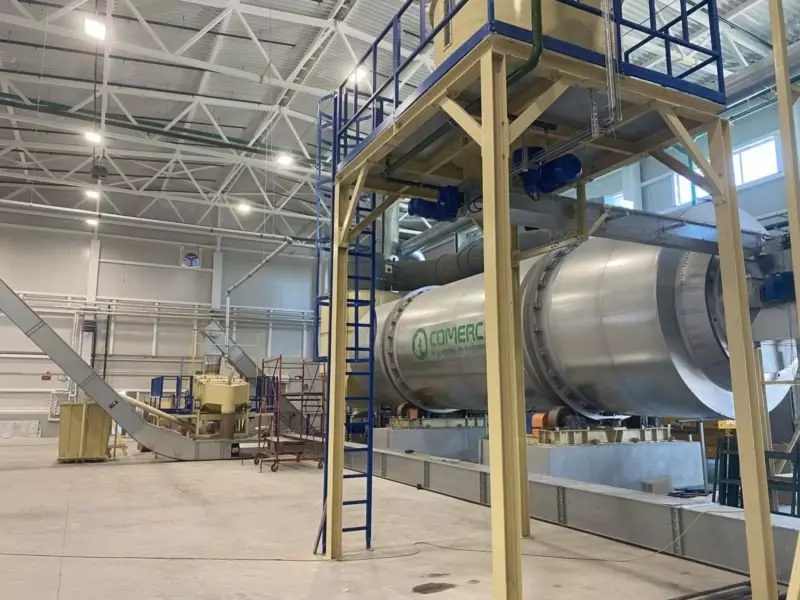
One of the more important stages of pellet production is drying the input material. Drum dryers are most commonly used for this process. What characterizes this type of dryer? To which features does it owe its popularity?
Drum dryers are used for drying shredded biomass such as wood chips, sawdust, and often also seeds and pits. Their main advantages include maintenance-free mixing, uniform drying, and components that facilitate loading and unloading. Compared to belt dryers, they take up little space, making them suitable for small plants. Modern dryers are usually equipped with numerous systems that improve their operation and safety, thanks to which human involvement in the machine’s operation process is reduced to a minimum.
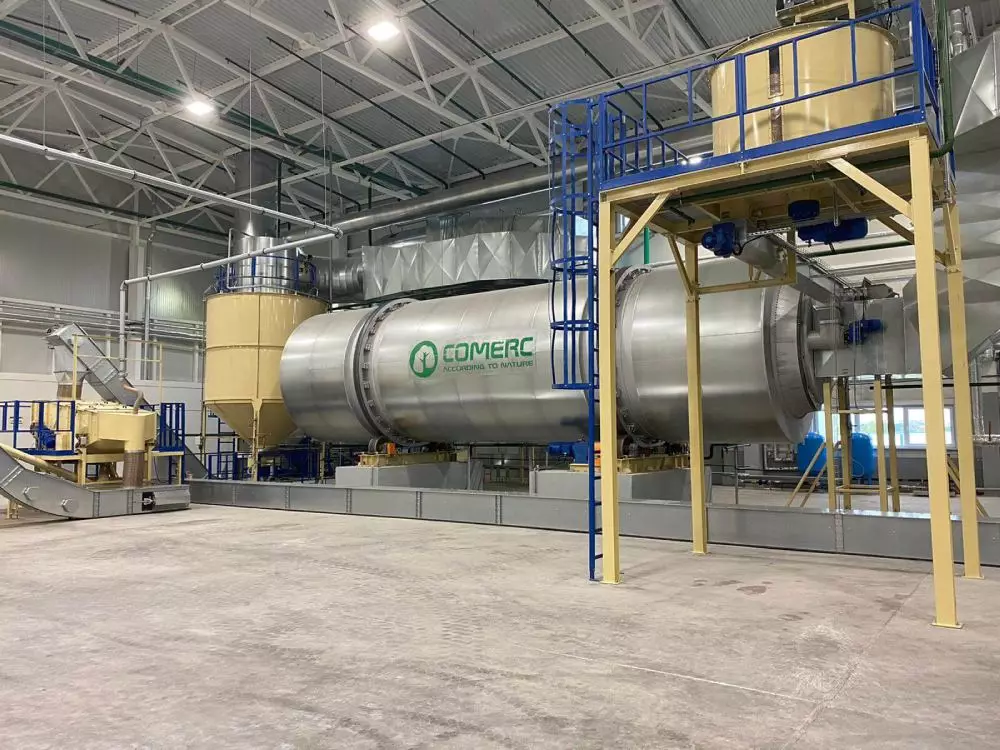
How does a drum dryer work?
In the drying process, the raw material is fed into the drying drum using a dosing screw and a dryer loading connector. Inside, the actual process of drying the material with warm air takes place, and thanks to the rotating movements of the drum, the material spreads and moves toward the exit. Dryer efficiency can vary depending on the model. CSB series devices have a capacity of 2 to 15 tons per hour. They are adapted to work with heat generators for both wet and dry biomass. CSB dryers are equipped with the LTD system, which enables drying with a large amount of air at a lower temperature than in other models. They also include, carbon monoxide sensors, automatic fire protection systems, and an SOV (shut-off valve), which is a flap that automatically cuts off the hot drying agent supply to the drum, significantly increasing the safety level of the drying process.