
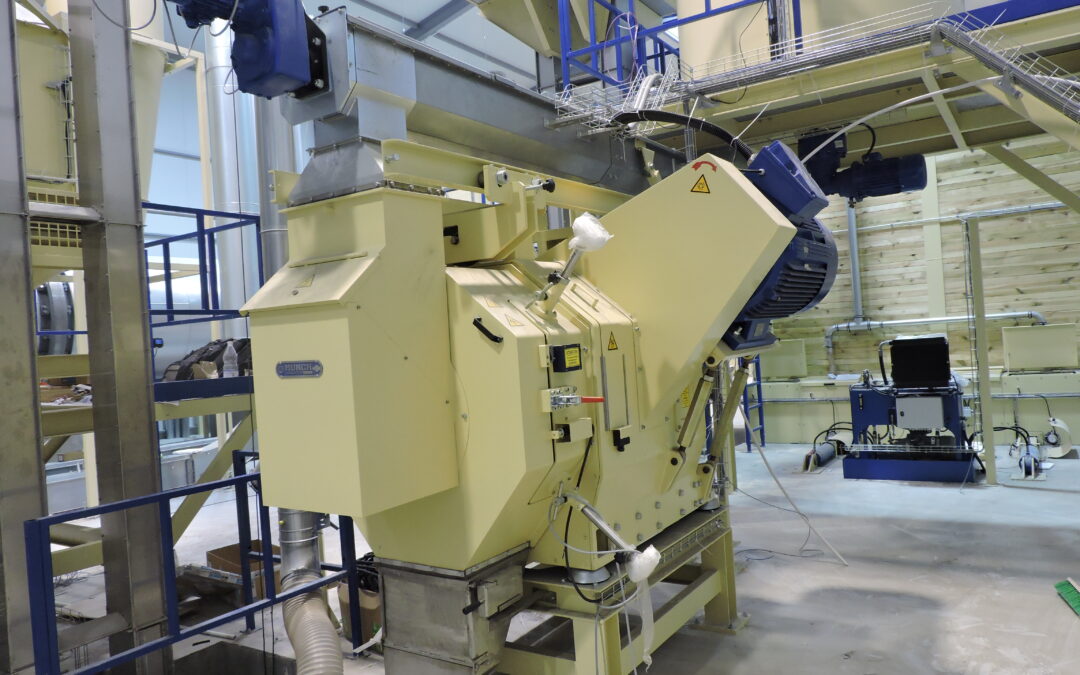
Pellet production is an excellent way to manage waste from the woodworking, carpentry, or furniture industries, allowing for the production of an ecological, wholesome, and high-calorie heating fuel. However, its production process requires the use of specialized machines that allow for obtaining small, cylinder-shaped granules from the available raw material, which can then be burned in dedicated boilers. The key element of the production line is the pellet press. Let’s take a closer look at its operation and see what to pay attention to when choosing it.
How does a pellet press work?
A pellet press (also known as a granulating press, granulator, or colloquially a “pelletizer”) allows for the final forming of the shredded, dried, and thoroughly cleaned raw material into granules that are ready for packaging after cooling. A pellet press utilizes special dies that work in conjunction with a roller system. The material fed into them is forced through extrusion holes with a diameter of several millimeters.
Thanks to the rollers pushing it, increased pressure is created in the channels, and the resulting friction raises the temperature. Both of these factors ensure that the pellet achieves the proper cohesiveness, also as a result of the previously applied steam. The cylinders passing through the channels are then cut with special knives into pieces approximately 35 mm long. Pellet presses can be equipped with either a ring die or a flat die. In the former case, the material passes from the inside of the cylindrical die to the outside. Flat dies, on the other hand, are positioned horizontally.
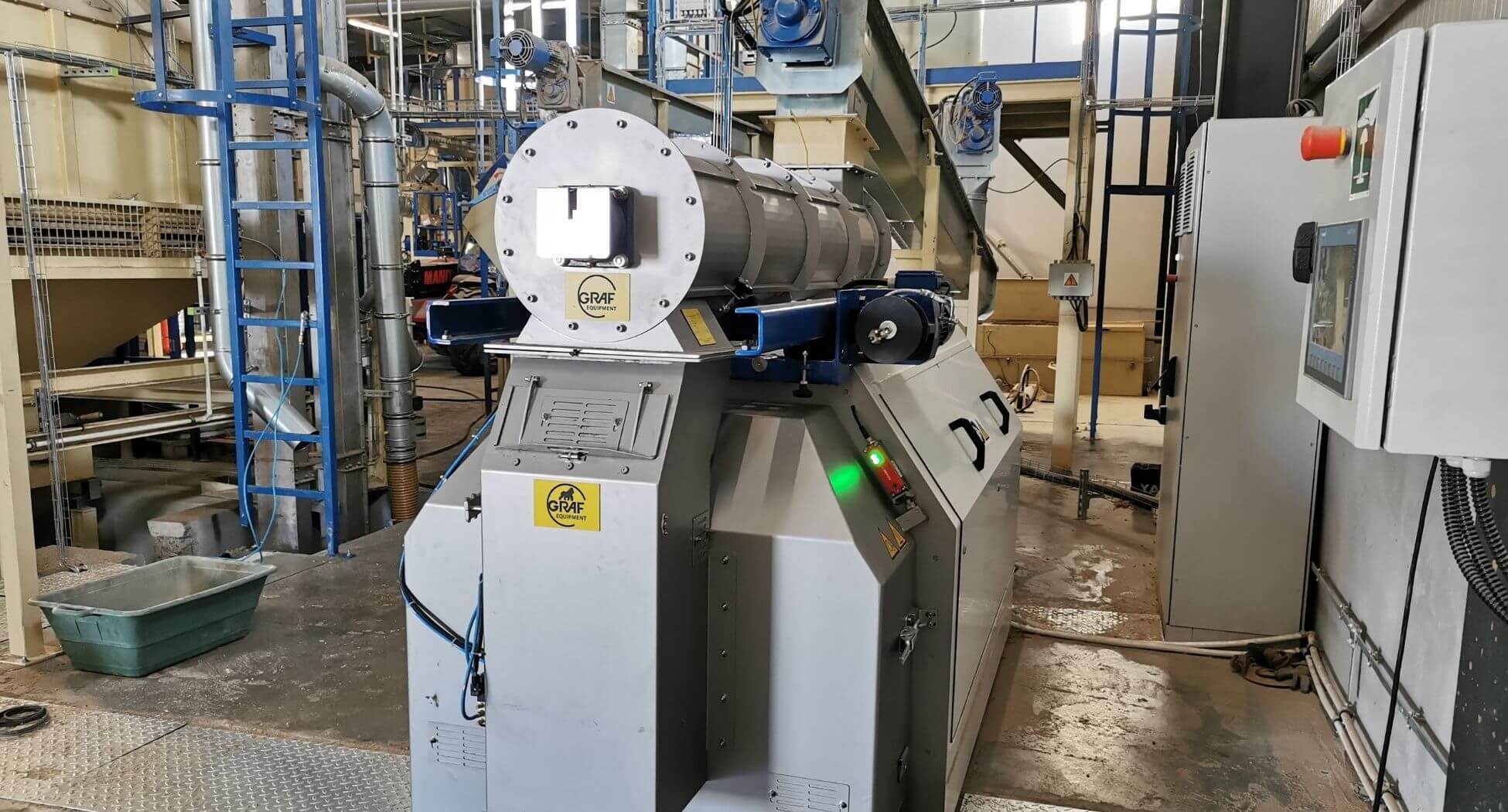
What are the most important parameters of a pellet press?
As with all industrial equipment, one of the most important parameters of a granulator is its capacity. Electricity consumption will also be important. Of great importance is also the type of mechanism regulating the operation of the rollers and their cooling, as well as the mounting system used for both the rollers and the die, which will allow for their quick replacement. For safety reasons, special attention should be paid to the lubrication and temperature measurement system of the rollers used in the granulator.