
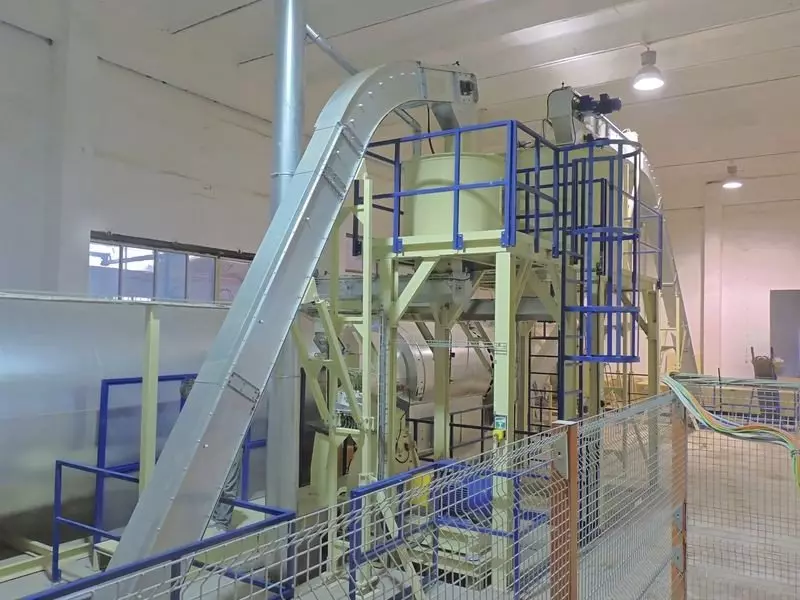
Pellet production takes place on technologically advanced production lines, which are often completely automated. The input material undergoes a series of processes aimed at properly preparing the raw material for pelletization. For the entire process to run smoothly, it is necessary to use special conveyors that transport the material between individual sections and devices within a given section. Which types of conveyors are used most frequently?
Conveyors, also known as feeders, significantly speed up and simplify the pellet production process. Their task is not only to move but often also to dose, feed, receive, load, and unload the raw material depending on the needs of a given production stage. Consequently, individual conveyors differ significantly in construction. The most commonly used transport devices include: belt, bucket, screw and drag conveyors.
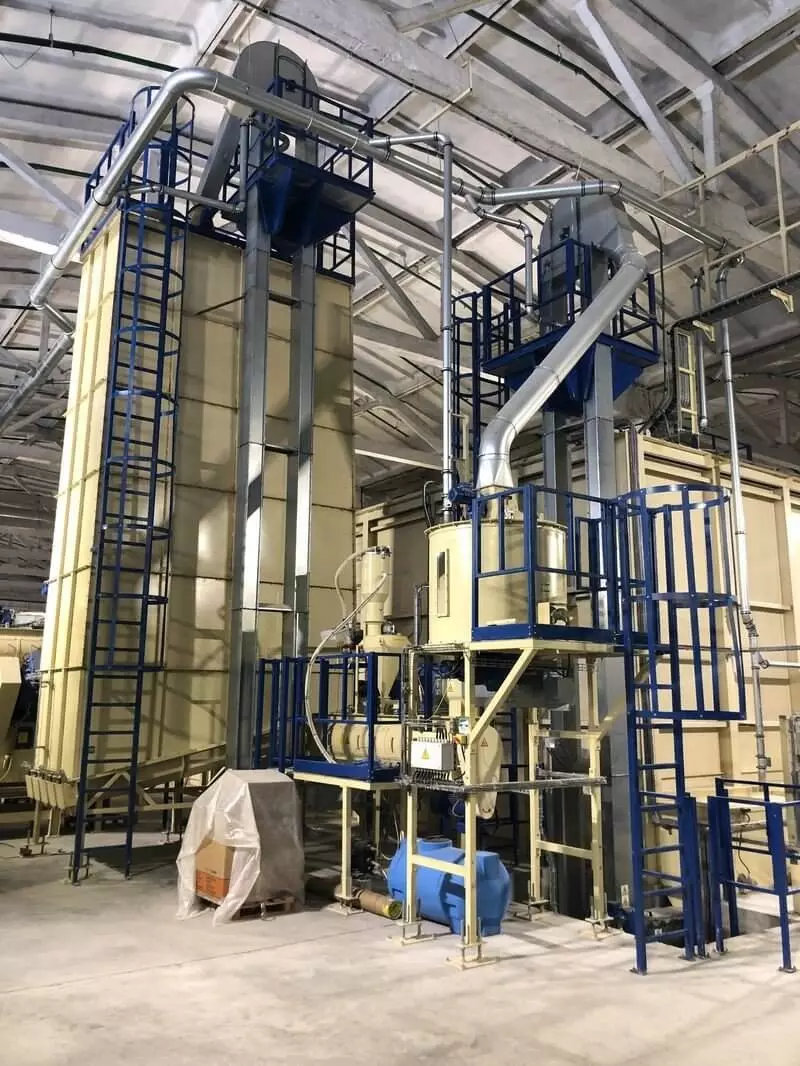
Most commonly used types of conveyors
Belt conveyors are used for the horizontal transport of various types of bulk materials: pellets, wood chips, sawdust, etc. They are transported on a belt moved by rollers. In pellet production lines, they are typically used for loading and unloading silos.
Bucket elevators (or bucket conveyors), on the other hand, are used for vertical transport. Their name comes from special containers (buckets) mounted on a belt that moves on shafts. They can transport various types of bulk materials.
Screw conveyors (also known as auger conveyors) are devices used for dosing and feeding fine bulk material, such as wood chips and sawdust, to subsequent production stages.
Drag conveyors (scraper conveyors), in turn, transport materials over long distances at angles of up to 60 degrees, giving them a wide range of applications. They are made of materials resistant to high temperatures.